


WEB DESK: China on Thursday successfully launched a new ocean-monitoring satellite from the Jiuquan Satellite Launch Center in the country’s northwest, state media reported, marking a significant upgrade to its maritime surveillance capabilities.
The Haiyang-2E (HY-2E) satellite was carried into space aboard a Long March-4B rocket, lifting off at 7:46 am. Space authorities confirmed that the spacecraft separated smoothly from the launch vehicle and entered its predetermined orbit as planned,
Expanding maritime capabilities
Developed by the China Academy of Space Technology, the state-of-the-art satellite is primarily tasked with safeguarding Beijing’s maritime rights and interests.
According to state officials, its operational portfolio will also heavily focus on disaster prevention and mitigation, marine resource development, and advancing comprehensive marine scientific research.
The HY-2E features significantly upgraded payload technology compared to its predecessors. This technological leap is expected to substantially enhance China’s high-resolution observational capabilities, particularly in complex nearshore waters.
Constellation network integration
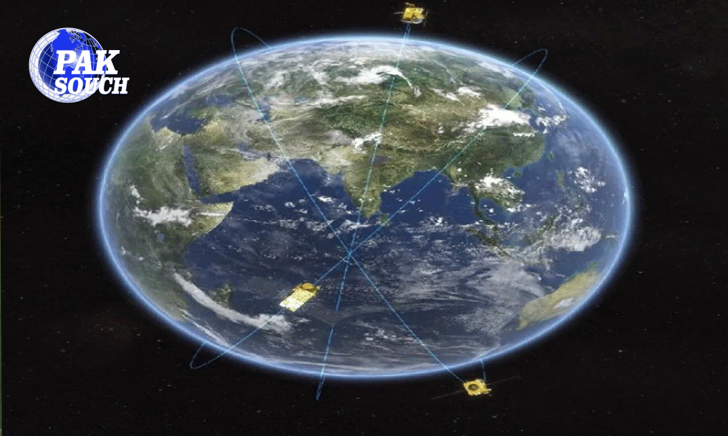
The newly launched satellite is slated to replace the aging HY-2B satellite, which has been in service since its launch in 2018. Once fully operational, the HY-2E will integrate into an active satellite network alongside the existing in-orbit HY-2C and HY-2D satellites.
This constellation is designed to ensure the continuous, stable, and uninterrupted operation of China’s marine dynamic environment monitoring system.
The mission’s carrier rocket, developed by the Shanghai Academy of Spaceflight Technology, is a three-stage liquid-propellant launch vehicle renowned for its versatility in deploying multiple payloads to varying orbits.
Capable of carrying up to 2.5 tonnes to a sun-synchronous orbit at an altitude of 700 kilometres, the flight marked the 654th mission for the long-standing Long March carrier rocket series.
About The Author