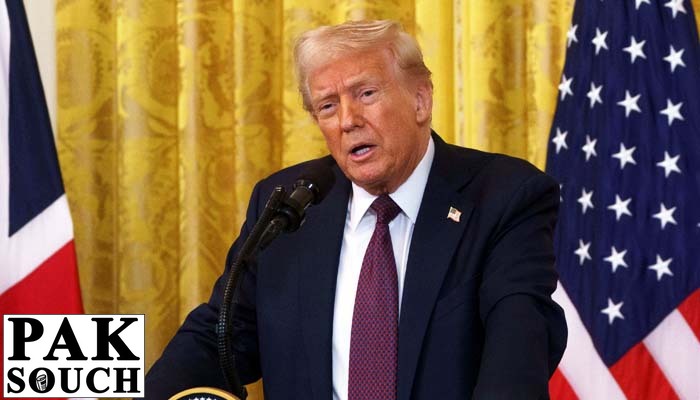
Washington: U.S. President Donald Trump has assured that Israel will not carry out another strike on Qatar, describing the Gulf nation as a close American ally. His statement came during a media briefing at the White House, where he addressed both international and domestic security issues.
Israel–Qatar Tensions
President Trump emphasized Qatar’s importance as a strategic partner of the United States, making it clear that Washington would not allow further Israeli aggression against the Gulf state. “Qatar is our ally, and Israel will not attack Qatar again,” he said firmly. His remarks followed heightened tensions in the region, where Israel had recently conducted a strike in Doha, sparking global concern.
Warning to Hamas
Trump also issued a stern warning to the Palestinian resistance group Hamas, noting their threats to kill hostages. He cautioned that using captives as human shields would lead to “serious consequences” and said Hamas leaders were fully aware of the risks they faced if they pursued such actions.
Domestic Security Measures in the U.S.
Turning to domestic issues, Trump announced that the National Guard would be deployed in phases across violence-hit cities including Chicago and New Orleans. The move, according to him, aims to restore law and order in urban centers experiencing unrest and surges in crime.
Military Operations in Venezuela
On the international security front, Trump revealed that U.S. forces had carried out a second airstrike in Venezuela, targeting drug cartels. He said three terrorists were killed while attempting to smuggle narcotics. Importantly, no American troops were harmed during the operation.
“The drug mafia was trying to push narcotics into the U.S.,” Trump stated, underscoring his administration’s commitment to combating cross-border trafficking networks.
Broader Implications
Trump’s assurance to Qatar highlights Washington’s delicate balancing act in the Middle East, where U.S. alliances with Israel and Gulf states often collide with broader geopolitical tensions. By publicly declaring that Israel would not attack Qatar again, Trump sought to reaffirm American support for Doha while sending a signal to Israel about the limits of military escalation in allied territories.
At the same time, his domestic announcements reflect a dual-track strategy: projecting strength abroad while tightening internal security measures at home. Analysts suggest that Trump’s firm stance against Hamas and drug cartels, coupled with his promise to protect Qatar, is designed to project an image of decisive leadership both internationally and domestically.