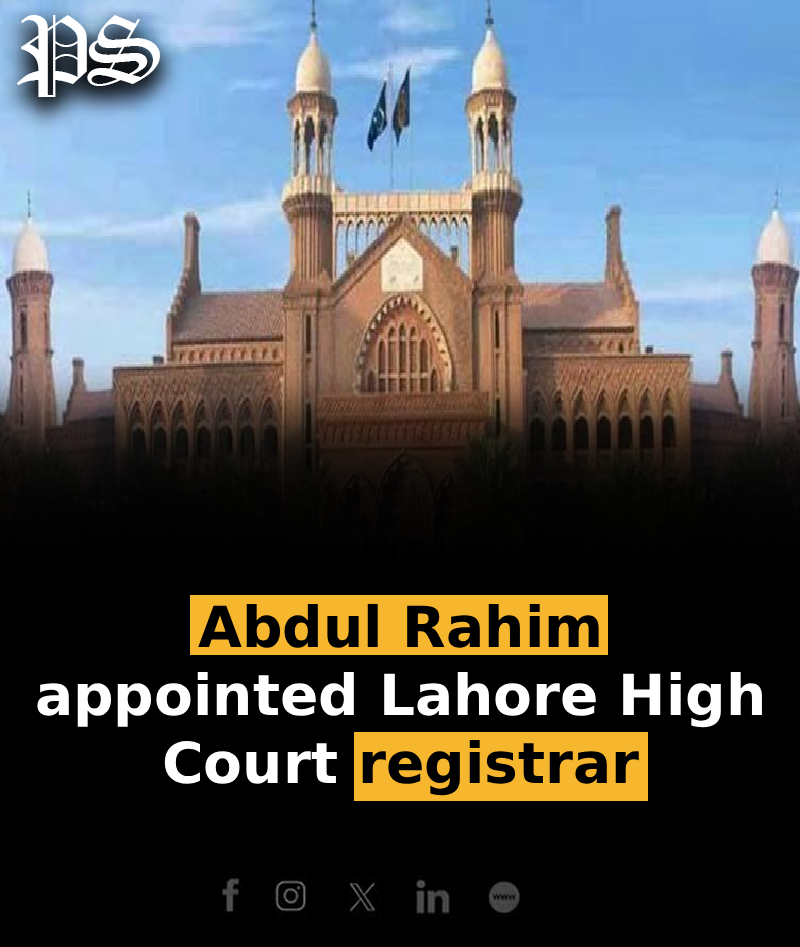



LAHORE: The Lahore High Court (LHC) has dismissed a petition challenging capacity charges included in electricity bills and alleged excess payments made to Independent Power Producers (IPPs), declaring the case non-maintainable and beyond the court’s constitutional jurisdiction.
The decision was issued by Justice Ahmad Nadeem Arshad in a detailed six-page judgment, which emphasized that policymaking in the energy sector falls within the authority of the government and Parliament rather than the judiciary.
Court Defines Limits of Judicial Intervention
In its ruling, the court observed that matters relating to electricity tariffs, capacity charges, and payments to power producers are policy issues that are primarily the responsibility of elected institutions and regulatory bodies. The judgment stated that courts cannot function as appellate forums for reviewing economic, financial, or regulatory policies merely because some citizens disagree with them.
Justice Arshad noted that constitutional petitions cannot be entertained solely on the basis of dissatisfaction with government policy decisions. According to the court, a petitioner must demonstrate a clear violation of fundamental rights or establish that a policy is illegal or unconstitutional before judicial intervention can be justified.
The judgment reiterated the principle that the judiciary must exercise restraint when dealing with administrative and policy matters that fall under the executive branch of government.
Petition Challenged Capacity Charges
The petition had questioned the legality and fairness of capacity charges included in electricity bills. Capacity charges are payments made to power producers to ensure that electricity generation capacity remains available, regardless of whether the electricity is actually consumed.
These charges have been a subject of public debate in Pakistan for several years, as many consumers and industry representatives argue that they significantly increase electricity costs. Critics contend that consumers are being forced to bear the burden of contractual obligations between the government and private power producers.
The petitioner had also challenged what were described as additional or excessive payments to Independent Power Producers, commonly known as IPPs, and sought judicial intervention regarding the recovery of those payments.
Energy Policy Is Government’s Domain
The Lahore High Court made it clear that decisions regarding energy policy, tariff structures, and agreements with power producers involve complex economic and technical considerations that are best handled by policymakers and specialized regulatory institutions.
The judgment stated that courts are not equipped to act as regulators, auditors, or economic experts when assessing such matters. Instead, responsibility for reviewing and formulating policies in the power sector lies with the executive branch, Parliament, and regulatory authorities established under the law.
According to the court, the formulation of energy policies requires balancing a wide range of considerations, including economic sustainability, investment requirements, energy security, contractual commitments, and consumer interests. These are decisions that must be made through the political and regulatory process rather than through judicial orders.
No Violation of Fundamental Rights Proven
A significant factor in the court’s decision was the petitioner’s inability to establish a violation of any fundamental right protected under the Constitution.
The judgment observed that while citizens may disagree with government policies or their economic consequences, such disagreement alone does not automatically create a constitutional issue. Courts can only intervene where there is evidence of illegality, constitutional violations, abuse of authority, or infringement of fundamental rights.
Justice Arshad stated that the petitioner failed to present sufficient legal grounds to justify judicial review of the challenged policies.
As a result, the court concluded that the constitutional petition could not proceed and therefore dismissed it.
Separation of Powers Emphasized
The ruling strongly highlighted the constitutional principle of separation of powers, which requires the judiciary, executive, and legislature to operate within their respective domains.
The court noted that judicial overreach into policymaking could disrupt the balance established by the Constitution. It stressed that courts must remain cautious when dealing with matters involving governance, administration, and economic management.
According to the judgment, directing the recovery of payments made to IPPs or restructuring energy-sector policies would effectively require the court to assume responsibilities assigned to other branches of government.
The court therefore held that such decisions fall outside the scope of judicial authority.
Public Interest Cannot Replace Policymaking
Another important observation in the judgment was that public interest litigation cannot be used as a mechanism for asking courts to formulate or redesign government policy.
While acknowledging the importance of public concerns regarding rising electricity costs, the court stated that policy disagreements should be addressed through democratic and administrative channels rather than through constitutional litigation.
The judgment emphasized that courts exist to interpret and enforce the law, not to create policy alternatives or replace the decision-making functions of elected governments and regulatory agencies.
Broader Context of Energy Sector Challenges
The ruling comes at a time when Pakistan’s energy sector continues to face significant challenges, including high electricity tariffs, circular debt, rising fuel costs, and ongoing debates over agreements with Independent Power Producers.
Capacity charges have become a particularly controversial issue because they constitute a major component of electricity bills. Successive governments have undertaken reviews of power purchase agreements and negotiated revisions with several IPPs in an effort to reduce financial pressure on consumers and improve the sustainability of the power sector.
However, the Lahore High Court’s decision makes it clear that disputes over the wisdom or effectiveness of such policies must generally be resolved through legislative, executive, and regulatory mechanisms rather than through the courts.
About The Author