

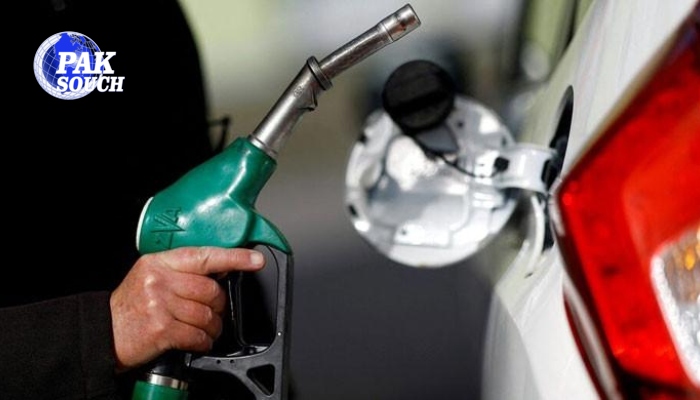
Pakistan’s latest petroleum pricing structure has once again drawn public attention, as official documents reveal that a significant portion of the petrol price is made up of government levies and distribution margins rather than the actual refinery cost. Despite a recent reduction in fuel prices, consumers continue to face a heavy financial burden due to high taxation and regulatory charges embedded in each litre of petrol.
According to official documents, the ex-refinery price of petrol currently stands at Rs 235.37 per litre. However, the final consumer price has been set at Rs 377.78 per litre. This indicates that nearly 38 percent of the retail price is composed of government-imposed levies, taxes, and other margins rather than the base cost of fuel itself.
The breakdown shows that a total of Rs 142.41 per litre is being collected from consumers in the form of petroleum levies and additional charges. Among these, the petroleum development levy (PDL) is the most significant component, amounting to Rs 116.08 per litre. In addition, a climate support levy of Rs 2.50 per litre has also been imposed. The remaining amount consists of various distribution margins, dealer commissions, and logistical costs involved in transporting fuel across the country.
This pricing structure has raised concerns among consumers and economic observers, as fluctuations in global oil prices do not always translate into proportional relief at the domestic level. Even when international crude oil prices decline or when the government announces reductions in petrol prices, the impact on end users remains limited due to the fixed and high proportion of domestic levies.
Economists note that petroleum taxes remain one of the major sources of revenue for the government. In recent years, the petroleum development levy has increasingly been used as a fiscal tool to bridge budget deficits and meet revenue targets agreed with international financial institutions. As a result, fuel prices in Pakistan are highly sensitive not only to global oil market trends but also to domestic fiscal policy decisions.
The inclusion of a climate support levy has also added a new dimension to the pricing debate. While the government has justified such charges as necessary for environmental and climate-related initiatives, critics argue that these additional costs further increase inflationary pressure on households already struggling with rising living expenses.
Transporters and logistics companies have also expressed concerns over the high cost of fuel, which directly affects transportation fares and the prices of essential goods. Since petrol and diesel are key inputs in supply chains, any increase in fuel costs tends to have a cascading effect on food prices, manufacturing costs, and public transport fares.
Consumer rights advocates argue that the lack of transparency in fuel pricing adjustments contributes to public frustration. While the base price of crude oil is often highlighted in media reports, the detailed breakdown of taxes and levies is less frequently communicated to the public in an accessible manner. This creates a perception gap between global oil trends and domestic fuel pricing.
On the other hand, government officials maintain that fuel pricing is a complex mechanism influenced by multiple factors, including import costs, exchange rate fluctuations, taxation requirements, and subsidy management. They argue that petroleum levies are essential for maintaining fiscal stability and funding national development projects.
Despite these justifications, the high proportion of taxes in fuel prices continues to be a sensitive issue for the general public. Many citizens believe that reducing petroleum levies could provide immediate relief in the face of inflation, especially for lower and middle-income groups who are disproportionately affected by rising transportation and utility costs.
The current pricing structure highlights a broader economic challenge: balancing revenue generation with affordability. As fuel prices remain a key driver of inflation, any adjustment in petroleum levies or global oil prices has a direct impact on household budgets across the country.
For now, consumers continue to pay Rs 377.78 per litre for petrol, with Rs 142.41 embedded in taxes and margins. Until structural reforms in taxation or energy pricing are introduced, fuel affordability is likely to remain a major economic concern in Pakistan.
About The Author