

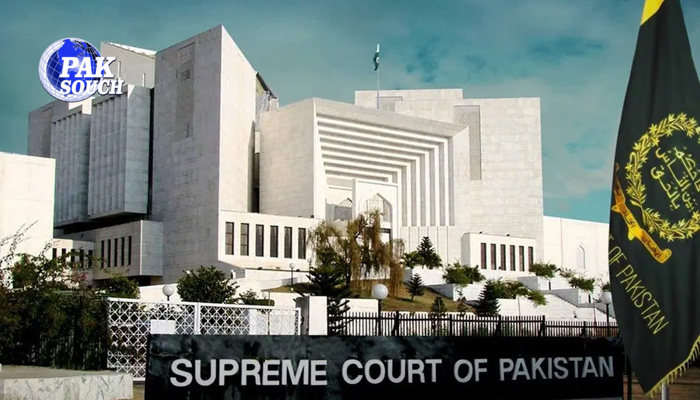
Islamabad: The Supreme Court of Pakistan has ruled that voluntary intoxication cannot be used as a defense against criminal liability, dismissing an appeal by a convicted rapist and murderer who sought to have his death sentence reduced to life imprisonment on the basis that he was under the influence of alcohol at the time of the crime.
In a significant judgment, the apex court upheld the death sentence awarded to Sunny Masih, who was convicted of the rape and murder of a five-year-old girl, affirming the decisions previously handed down by both the trial court and the high court.
Supreme Court Upholds Death Penalty
The three-member bench hearing the case comprised Justice Muhammad Hashim Khan Kakar, who authored the written judgment, along with Justice Salahuddin Panhwar and Justice Ishtiaq Ibrahim.
The court rejected the appeal filed by the convict, maintaining that the gravity of the offense and the circumstances surrounding the crime did not warrant any reduction in punishment.
The ruling reinforces the legal principle that individuals who voluntarily consume alcohol or narcotic substances remain fully responsible for their actions while intoxicated.
Defense Argument Based on Intoxication
During the proceedings, counsel for the convict argued that the accused was intoxicated at the time the offense was committed and therefore deserved a reduction of his sentence from death to life imprisonment.
The defense contended that the accused’s impaired mental state should be considered a mitigating factor in determining punishment.
However, the court found the argument legally untenable, particularly because the convict had himself admitted that he had consumed alcohol voluntarily.
Voluntary Intoxication Is Not a Legal Defense
In its judgment, the Supreme Court made it clear that a person who willingly consumes alcohol or other intoxicating substances cannot later seek exemption from criminal responsibility on that basis.
The court stated that voluntary intoxication does not diminish accountability for criminal conduct and cannot be used as a defense against prosecution or sentencing.
According to the judgment, allowing such a defense would undermine the principles of justice and accountability embedded in criminal law.
Exception Only in Cases of Involuntary Intoxication
While rejecting the appeal, the Supreme Court clarified the legal distinction between voluntary and involuntary intoxication.
The court explained that an exemption from criminal responsibility may only arise in exceptional circumstances where:
- An intoxicating substance is administered against a person’s will.
- A person is unknowingly given alcohol or narcotics.
- The individual is deprived of the ability to understand or control their actions due to intoxication that was not self-induced.
In such situations, courts may consider the effect of intoxication on criminal liability. However, the court emphasized that these exceptions do not apply when a person knowingly and willingly consumes intoxicants.
Nature of the Crime Highlighted
The written judgment underscored the severity of the offense committed by the convict.
The court noted that the accused had brutally assaulted and murdered an innocent five-year-old child after committing sexual violence against her.
Describing the crime as extremely grave and heinous, the court observed that it was not a case deserving of leniency or mitigation.
The judgment stated that the brutality of the offense and the vulnerability of the victim weighed heavily against any request for a reduced sentence.
Important Legal Precedent
Legal experts believe the ruling provides important clarification regarding the treatment of intoxication in Pakistan’s criminal justice system.
The judgment reaffirms that individuals cannot evade legal consequences by claiming that they were under the influence of alcohol or drugs when they voluntarily chose to consume those substances.
The decision may serve as a reference in future criminal cases involving similar arguments concerning intoxication and criminal responsibility.
Appeal Dismissed
After reviewing the facts of the case and the legal arguments presented, the Supreme Court dismissed the convict’s appeal and upheld the death sentence imposed by the lower courts.
The ruling concludes that voluntary intoxication offers no legal shield against accountability for serious crimes and that the nature of the offense committed in this case leaves no basis for reducing the punishment.
With the appeal rejected, the death sentence awarded to Sunny Masih remains in force, subject to any other legal remedies available under Pakistani law.
About The Author