

Karachi: The severe water shortage that has plagued Karachi for several months remains unresolved, leaving millions of residents facing significant hardship as disruptions in water supply continue across various parts of the city.
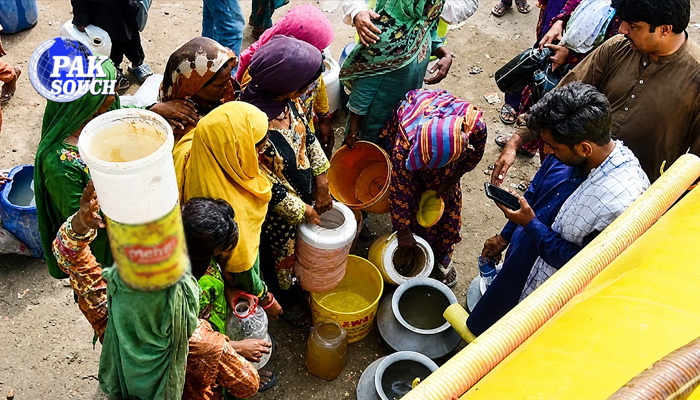
The latest interruptions have further worsened an already difficult situation, forcing many households to rely on expensive private water tankers to meet their daily needs.
Water Supply Hit by Power Shutdown at Dhabeji Pumping Station
According to reports, Karachi’s water supply was disrupted on Sunday after a forced power shutdown by K-Electric at the Dhabeji Pumping Station, one of the city’s major water supply facilities.
The interruption affected the transmission of water to various areas, adding pressure to a system already struggling to meet the demands of the country’s largest city.
Residents in several neighborhoods reported reduced water pressure or complete suspension of supply following the disruption.
Fault in Main Power Cable Further Reduces Supply
The situation deteriorated further on Monday when a fault developed in a main power cable supplying electricity to the Hub Pumping Station.
The power outage at the pumping facility led to an additional reduction in water supply to Karachi, compounding the effects of the earlier disruption at Dhabeji.
Water authorities warned that restoring normal supply levels could take time as technical teams work to address the electricity-related issues affecting pumping operations.
Residents Forced to Buy Expensive Water
As shortages continue, many residents have been compelled to purchase water from private tanker operators.
Citizens complain that tanker prices have risen significantly due to increased demand, placing an additional financial burden on households already struggling with inflation and rising utility costs.
In many localities, residents report waiting days for municipal water supply, forcing them to spend substantial amounts on privately delivered water.
The ongoing crisis has also renewed concerns about the influence of the so-called water tanker mafia, which critics say benefits from persistent shortages in the city’s official water distribution system.
Hub Water Supply Severely Affected
A spokesperson for the Karachi Water and Sewerage Corporation (KWSC) stated that the disruption at the Hub Pumping Station has affected the delivery of approximately 85 million gallons of water per day to Karachi.
The loss of such a significant volume has had a noticeable impact on water availability across multiple districts of the city.
Officials indicated that efforts are underway to restore normal operations as quickly as possible, but supply challenges may persist until the electrical issues are fully resolved.
K-Electric Responds
In response to concerns about the outage, a spokesperson for K-Electric stated that electricity supply to the Hub Pumping Station is currently being maintained through alternative sources.
The utility company said it is working to ensure uninterrupted power availability for critical infrastructure and is coordinating with relevant authorities regarding the situation.
However, residents continue to report water shortages, highlighting the gap between operational restoration efforts and the actual resumption of normal water distribution.
Long-Term Water Challenges in Karachi
Karachi has faced recurring water shortages for years due to a combination of factors, including:
- Rapid population growth.
- Aging water infrastructure.
- Distribution losses and leakages.
- Power-related disruptions at pumping stations.
- Insufficient water supply compared to demand.
- Illegal connections and theft of water.
Experts estimate that Karachi’s daily water demand significantly exceeds the volume available through official supply channels, contributing to chronic shortages in many areas.
Calls for Sustainable Solutions
Residents and civic organizations have repeatedly called on authorities to implement long-term solutions to address the city’s water problems.
Suggestions include upgrading pumping stations, improving distribution networks, reducing system losses, increasing water storage capacity, and accelerating major water supply projects intended to meet Karachi’s growing needs.
For now, however, many citizens remain dependent on costly water tankers as they wait for regular supply to be restored.
With disruptions at both Dhabeji and Hub pumping stations affecting water availability, Karachi’s ongoing water crisis continues to create serious difficulties for residents across the metropolitan area.
About The Author