


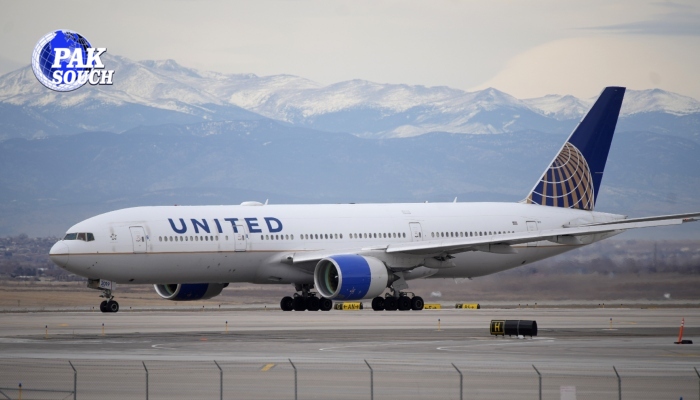
Newark, United States: A United Airlines flight bound for Spain was forced to return to its departure airport after a passenger’s Bluetooth device appeared with the name “Bomb,” triggering security concerns and prompting the crew to follow established aviation safety procedures.
The incident highlights the strict security protocols followed by airlines worldwide, where any potential threat—whether real or perceived—is treated with utmost seriousness.
Flight Departed for Spain
According to airline sources, United Airlines Flight UA236 departed from Newark Liberty International Airport on the evening of May 30 at approximately 6:00 p.m.
The flight was scheduled to travel to Palma de Mallorca, a popular Spanish island destination in the Mediterranean Sea.
The aircraft operating the route was a Boeing 767-400ER, a wide-body jet commonly used for long-haul international flights.
Suspicious Bluetooth Name Detected Mid-Flight
Nearly two hours after takeoff, while the aircraft was flying over the Atlantic Ocean, a passenger reportedly noticed a Bluetooth-enabled device appearing under the name “Bomb.”
The appearance of the word immediately raised concerns among passengers and cabin crew members.
Although there was no immediate confirmation that an actual explosive device was on board, aviation security procedures require crews to treat any potential threat seriously until it can be thoroughly investigated.
Pilot Follows Security Procedures
After the concern was reported, the flight crew initiated standard security protocols.
Following established Standard Operating Procedures (SOPs) for potential security threats, the pilot decided to turn the aircraft around and return to Newark rather than continue across the Atlantic toward Europe.
Aviation experts note that when a possible security threat emerges during an international flight, returning to the departure airport is often considered the safest and most practical option, particularly when the aircraft is still within a reasonable distance.
Emergency Return to Newark
The aircraft landed safely back at Newark Liberty International Airport approximately three hours and forty-five minutes after its original departure.
Upon arrival, airport security personnel, law enforcement agencies, and aviation authorities reportedly conducted the necessary inspections and safety checks.
Passengers were required to remain patient while security teams completed their investigation and ensured there was no actual threat to the aircraft.
Flight Cleared to Continue Journey
After all required security procedures were completed and authorities determined that the aircraft was safe, the flight received clearance to resume its journey.
United Airlines subsequently dispatched the aircraft to continue its scheduled route to Palma de Mallorca.
No injuries were reported, and there was no indication that an actual explosive device had been found on board.
Growing Concern Over Device Names and Security
The incident has sparked renewed discussion about the use of inappropriate names for Bluetooth devices, Wi-Fi hotspots, and electronic gadgets.
Security experts warn that names referencing bombs, weapons, terrorism, or other threats can cause alarm and may trigger official responses, especially in sensitive environments such as airports and aircraft.
Modern smartphones and laptops can detect nearby Bluetooth devices, meaning names assigned by users may be visible to others in close proximity.
Strict Aviation Security Standards
Airlines and aviation authorities maintain a zero-tolerance approach toward potential threats. Even seemingly harmless jokes or misleading device names can result in:
- Flight delays.
- Emergency landings.
- Security investigations.
- Passenger questioning.
- Possible legal consequences.
Aviation security professionals emphasize that safety concerns must always be investigated thoroughly because crews cannot assume that a reported threat is harmless.
Reminder for Travelers
The incident serves as a reminder that electronic device names are not private and can be seen by nearby users. Travelers are encouraged to avoid naming devices in ways that could be interpreted as threatening or suspicious.
While the “Bomb” Bluetooth name ultimately did not lead to the discovery of an actual explosive device, it was sufficient to trigger a major security response and force an international flight to return to its departure airport.
The event demonstrates how seriously aviation authorities treat any potential threat and underscores the importance of responsible behavior when traveling by air.
About The Author