

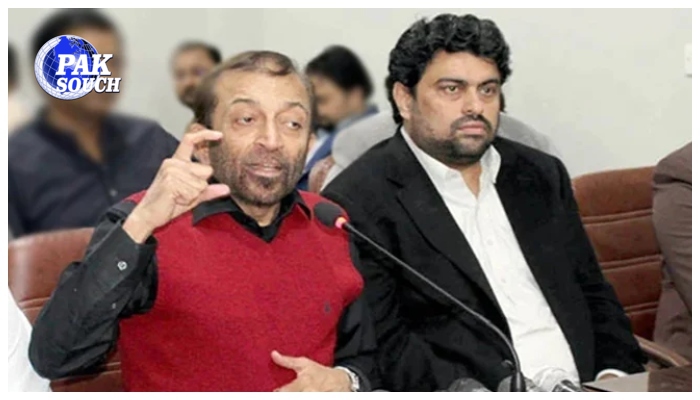
Karachi: Senior leader of the Muttahida Qaumi Movement-Pakistan (MQM-P), Farooq Sattar, has alleged that the Pakistan Peoples Party (PPP) played a key role in the removal of former Sindh Governor Kamran Tessori because he stood in the way of what Sattar described as the party’s “illegal activities.” The remarks were made during a press conference in Karachi, where Sattar was accompanied by several MQM-P leaders.
Speaking to journalists, Farooq Sattar questioned the circumstances surrounding Kamran Tessori’s departure from the office of Governor Sindh. He argued that Tessori should be reinstated before the next local government elections, claiming that his removal was politically motivated rather than based on administrative considerations.
“Kamran Tessori was removed because he was creating obstacles for the PPP’s unlawful actions,” Sattar alleged. He further questioned the rationale behind the decision, saying that even senior political figures had acknowledged that there were no significant disagreements with the former governor. Referring to statements attributed to senior government officials, Sattar remarked that if there was no issue with Tessori’s performance, then the public deserved an explanation for his removal.
Criticism of PPP Governance
During the press conference, Sattar launched a broader criticism of the PPP’s governance in Sindh. He claimed that the party’s political dominance in the province was weakening and predicted that its influence would eventually decline not only in Karachi but also in interior Sindh.
According to Sattar, the demand for stronger local governments has been a long-standing objective of MQM-P. He reiterated the party’s support for Article 140-A of the Constitution, which emphasizes the devolution of political, administrative, and financial responsibilities to elected local governments.
He said MQM-P has been advocating for effective local governance reforms for nearly three decades and called for constitutional amendments that would strengthen local bodies. Sattar maintained that various political parties now support greater local autonomy and that meaningful reforms would eventually become unavoidable.
Concerns Over Land and Encroachment Issues
A major portion of Sattar’s press conference focused on land management and alleged encroachments in Karachi. He questioned how no-objection certificates (NOCs) had been issued in cases where court rulings were already in place. According to him, certain land occupations were being given legal cover despite judicial decisions to the contrary.
Sattar specifically referred to land near Hill Park, claiming that approximately 62 acres were involved in a controversial dispute. He accused powerful groups of benefiting from illegal occupations and warned that Karachi’s residents would no longer tolerate such practices.
“The era of protecting land grabbers should come to an end,” he said, adding that MQM-P would continue raising its voice against individuals and groups involved in unlawful land occupations.
He also questioned the silence of some political parties regarding these issues and urged all stakeholders to take a clear position on matters related to public land and urban development.
Demand for Greater Municipal Authority
Farooq Sattar argued that Karachi’s land and municipal affairs should be managed more transparently and efficiently. He emphasized that the Karachi Metropolitan Corporation (KMC) should play a central role in matters related to land leasing and urban planning.
The MQM-P leader noted that discussions about placing Karachi under greater federal oversight were not new. He pointed out that from 1947 until 1970, Karachi had been administered under arrangements that differed from the current provincial structure.
According to Sattar, the city’s unique economic and demographic significance requires a governance model that ensures accountability, development, and equitable distribution of resources. He said Karachi contributes substantially to Pakistan’s economy and therefore deserves stronger administrative attention.
Warning Against the “Land Mafia”
Sattar repeatedly referred to what he described as a “land mafia” operating in Karachi. He claimed that over the past 18 years, various influential groups had been allowed to occupy valuable land, including public property and environmentally sensitive areas.
He alleged that hills and green spaces were being altered for commercial purposes, with plots being carved out and sold at high prices. Referring to reports of construction activities in hilly areas, Sattar said some residents had even been sold land on terrain that required extensive modification before it could be used.
“The people of Karachi are no longer willing to accept these practices,” he stated. He challenged those involved in illegal occupations and vowed that MQM-P would continue highlighting such issues at every available forum.
Concerns About Crime and Urban Management
The MQM-P leader also expressed concern about Karachi’s law-and-order situation. He warned that the city risked becoming a hub for criminal elements if decisive action was not taken.
Sattar argued that urban management challenges, including illegal land occupation, weak municipal oversight, and inadequate planning, were contributing to broader governance problems. He called on the mayor and other civic authorities to take immediate steps against encroachment networks and ensure that public assets are protected.
Recalling his own tenure as mayor, Sattar claimed that he had previously taken action against illegal occupations in the Hill Park area and urged current authorities to demonstrate similar resolve.
Looking Ahead
As local government elections approach, MQM-P appears determined to make governance, municipal empowerment, and land management central themes of its political campaign. Farooq Sattar’s remarks reflect the party’s continuing criticism of the PPP-led administration in Sindh and its push for greater local autonomy in Karachi.
Whether these allegations lead to further political debate or official responses remains to be seen, but the statements have once again highlighted longstanding disputes over governance, land use, and political authority in Pakistan’s largest city.
About The Author