

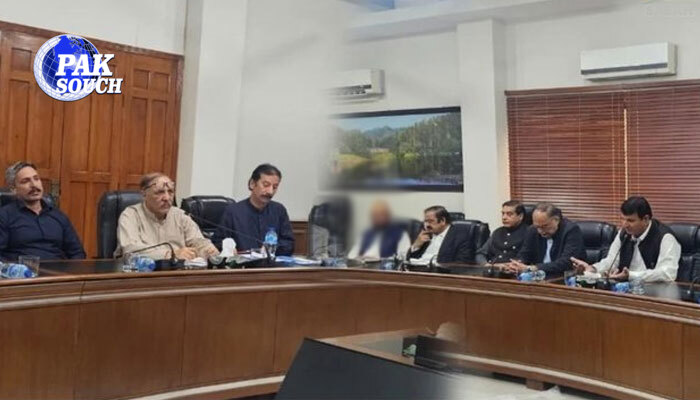
MUZAFFARABAD: Negotiations between the Public Action Committee (PAC) and the federal government’s negotiating committee have concluded in Muzaffarabad, with both sides agreeing to continue engagement in the coming days.
Despite the discussions, the Public Action Committee announced that it would maintain its call for a strike and long march on June 9, indicating that key issues remain unresolved.
Public Action Committee Maintains Protest Call
Following the talks, representatives of the Public Action Committee stated that their planned protest activities would continue as scheduled.
The committee reaffirmed its decision to hold a strike and long march on June 9, saying that its demands had not yet been fully addressed.
The announcement suggests that negotiations have not yet produced a final breakthrough, although communication channels remain open.
Rana Sanaullah Says Talks Have Not Failed
Prime Minister’s Adviser Senator Rana Sanaullah, who participated in the discussions, emphasized that the negotiations should not be viewed as a failure.
He stated that both sides had exchanged views and that dialogue could resume at any time.
“Talks have not failed and can restart whenever necessary,” he said.
Rana Sanaullah also stressed that elections in Azad Jammu and Kashmir (AJK) would be conducted in accordance with constitutional and legal requirements.
All Parties Conference Planned
According to Rana Sanaullah, the Government of Azad Kashmir has decided to convene an All Parties Conference (APC) in light of the current political situation.
He indicated that another round of negotiations could take place on June 6 or June 7, raising hopes that outstanding issues may still be resolved through dialogue.
Political observers view the proposed APC as an effort to build broader consensus among stakeholders and reduce tensions ahead of important political decisions.
Key Demands Discussed
Sources familiar with the negotiations said the talks focused on the Public Action Committee’s 38-point Charter of Demands.
Among the most significant issues discussed was the proposed abolition of 12 refugee seats in the Azad Kashmir legislative framework.
The broader charter reportedly includes constitutional, administrative, political, and governance-related demands that the committee has been pursuing through public mobilization and negotiations.
Election Schedule Linked to Negotiations
Sources indicated that the announcement of the Azad Kashmir general election schedule may depend on progress in negotiations and political consultations.
Officials are reportedly considering the outcome of the dialogue process before making a final decision regarding the election timetable.
This has added further importance to the ongoing discussions between the government and the Public Action Committee.
Senior Leaders Participated
The negotiations brought together senior political leaders and government representatives, including:
- Senator Rana Sanaullah
- Qamar Zaman Kaira
- Raja Pervaiz Ashraf
- Ahsan Iqbal
- Azad Kashmir Prime Minister Faisal Mumtaz Rathore
- Members of the Public Action Committee
The participation of high-profile figures reflected the significance of the issues under discussion and the desire to reach a peaceful resolution through dialogue.
Political Significance
The outcome of the talks is being closely watched in Azad Kashmir, where political developments in recent months have generated considerable public interest.
Analysts note that maintaining dialogue remains crucial for addressing contentious issues and ensuring political stability in the region.
The continuation of negotiations could help bridge differences and prevent further escalation of tensions.
Conclusion
Talks between the Public Action Committee and the federal negotiating committee in Muzaffarabad have concluded without a final agreement, but both sides remain engaged. While the Public Action Committee has decided to proceed with its planned June 9 strike and long march, government representatives insist that negotiations remain open and may resume within days. With an All Parties Conference under consideration and key issues still under discussion, the coming week is likely to play an important role in shaping Azad Kashmir’s political landscape.
About The Author