

Interior Minister Mohsin Naqvi has said Pakistan will continue to support dialogue, peace and international cooperation, pointing to Islamabad’s role in recent peace efforts as the country emerged as a key intermediary between the United States and Iran during this year’s conflict.
Addressing an audience in Doha, Naqvi said no country could secure regional peace on its own and stressed that sustained dialogue, mutual trust and sincere efforts by all sides were essential to preventing and resolving conflicts.
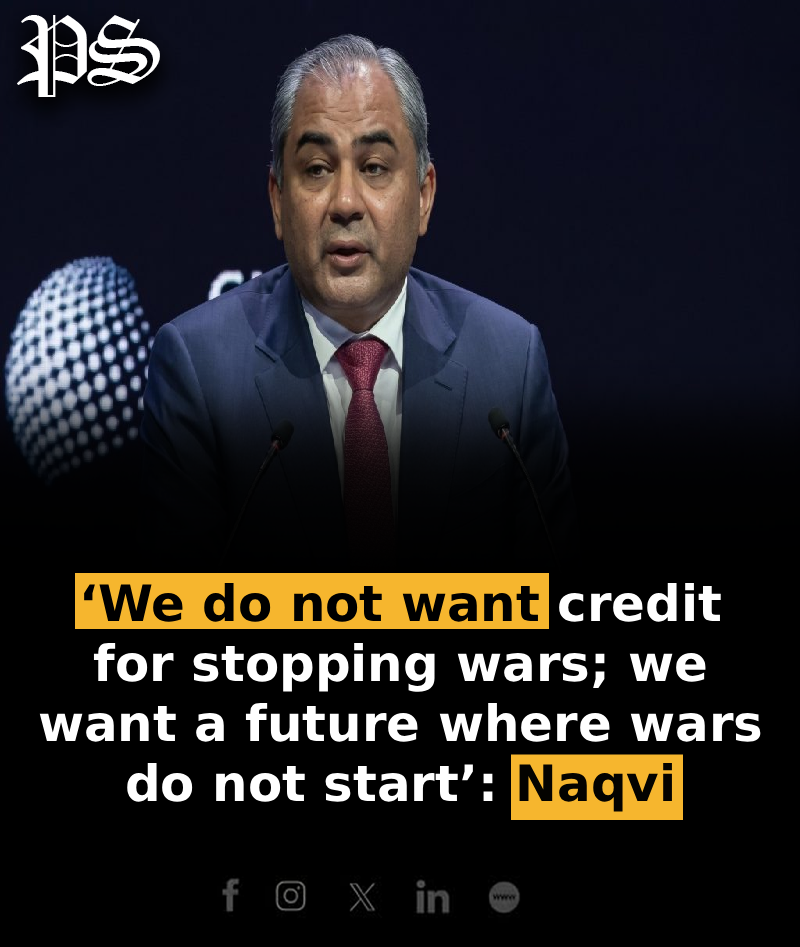
“We do not want credit for stopping wars. We want a future where wars do not start,” Naqvi said, adding that Pakistan was proud of its contribution to recent peace efforts but regarded preventing conflict as more important than receiving recognition for helping end one.
“Pakistan is proud of the role it has played in recent peace efforts. We will continue to support dialogue, peace and cooperation because we believe that winning peace is far more important than winning a war,” he said.
His remarks come after months of Pakistani diplomatic engagement during the US-Iran conflict, which saw Islamabad move from calling for restraint to becoming a key channel for communication between Washington and Tehran.
Pakistan initially urged restraint and a return to talks after the conflict escalated, with Deputy Prime Minister and Foreign Minister Ishaq Dar saying Islamabad was using diplomatic channels to encourage negotiations and reduce tensions.
Islamabad emerges as key channel between Washington and Tehran
Pakistan’s diplomatic role became more prominent as direct engagement between the United States and Iran developed through Islamabad.
Prime Minister Shehbaz Sharif later said Pakistan had helped sustain the diplomatic process and bring the two sides towards negotiations. He credited Ishaq Dar and Field Marshal Asim Munir with supporting the mediation effort, while also highlighting the economic impact of the war, particularly through higher global oil prices.
The White House subsequently described Pakistan as the main intermediary in the US-Iran negotiations, while US Secretary of State Marco Rubio referred to Islamabad as Washington’s “primary interlocutor” as efforts continued to prevent renewed fighting.
Pakistan’s mediation also extended to the Strait of Hormuz, whose disruption had implications for global energy supplies and shipping. Islamabad backed the immediate reopening of the strategic waterway while maintaining contacts with Tehran, Washington and other regional stakeholders.
Foreign Office officials at the time said Pakistan remained actively involved in diplomatic efforts but avoided disclosing details of proposals under discussion because of the confidence placed in Islamabad by the parties.
Islamabad MoU marks major diplomatic step
The mediation process later culminated in the Islamabad Memorandum of Understanding, which was electronically endorsed by US President Donald Trump, Iranian President Masoud Pezeshkian and Prime Minister Shehbaz Sharif in his role as mediator.
The Islamabad MoU established a framework for further negotiations, including steps towards de-escalation and the reopening of the Strait of Hormuz.
Although the diplomatic process subsequently faced difficulties, Pakistan continued to figure prominently in efforts to restore talks.
By August, Iran’s Foreign Ministry said Pakistan, Türkiye and Qatar were involved in attempts to revive the framework. Iranian Foreign Ministry spokesperson Esmaeil Baghaei described Pakistan as a key intermediary between Tehran and Washington, even as Tehran ruled out an immediate resumption of direct negotiations with the United States.
Naqvi calls for dialogue, trust and joint action
Against this backdrop, Naqvi said recent regional conflicts offered three broad lessons: channels for dialogue should never be closed, negotiations required trust, and lasting peace depended on sincere efforts from everyone involved.
“Never close the doors to dialogue. Trust is the most important key for any kind of talk. And thirdly, peace requires sincere efforts from everyone,” he said.
Naqvi also linked regional stability with the fight against terrorism, calling for stronger international cooperation, improved intelligence sharing and coordinated action.
“Terrorism is a common enemy. We need stronger cooperation, better intelligence sharing and joint efforts to defeat it,” he said.
The interior minister said Pakistan had itself suffered heavily from terrorism, with thousands of civilians, soldiers and police personnel losing their lives over the years.
He also highlighted Pakistan’s contribution to United Nations peacekeeping missions, saying Pakistani soldiers and police personnel had served in conflict-affected countries for decades, helping protect civilians, support local law-enforcement institutions and restore stability.
Naqvi said Pakistan’s approach went beyond seeking recognition for helping bring individual conflicts to an end and instead focused on maintaining dialogue and cooperation before disputes escalated into wars.
The objective, he said, was not simply to receive credit for stopping wars after they had started, but to work towards a future in which they could be prevented altogether.
PAK SOUCH MEDIA GROUP
Daily Pak Souch Newspaper Sukkur – Daily Pak Special Newspaper Karachi – Daily Pak Today Newspaper Karachi – Daily Pak Jazbo Newspaper Sukkur
Head Office : Ayub Gate Shaikh Muhalla Near Rabbania Masjid Sukkur
Karachi Office : Office No. 1901-B, 19th Floor Saima Trade Tower (B) Block I.I Chandigarh Road Near Jung Press, Shaheen Complex & National Museum of Pakistan Karachi Sindh Pakistan.
Contact : 03009319022
Website 1 : https://paksouch.com/
Website 2 : https://sindhi.paksouch.com/
Website 3 : https://pakjazbo.com/
Website 4 : https://urdu.pakjazbo.com/
About The Author