

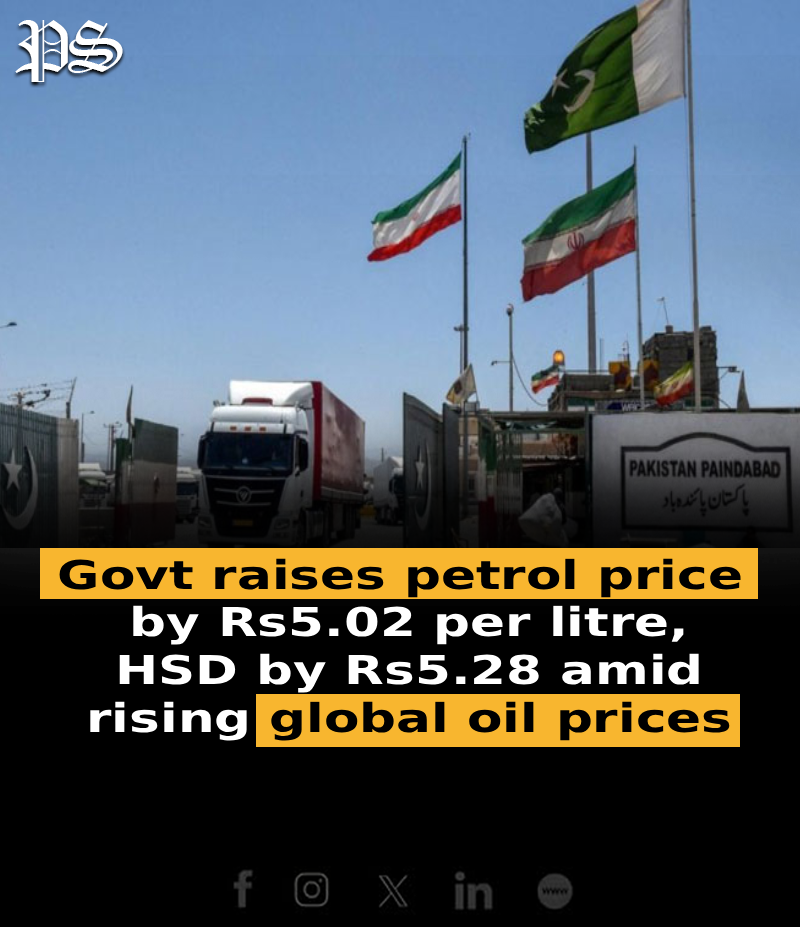
ISLAMABAD: Pakistan’s imports from Iran have continued to increase despite ongoing uncertainty and tensions in the region, with official figures and sources indicating a significant rise during the opening months of the current fiscal year.
According to sources, Pakistan imported goods worth approximately $248 million from Iran during the first two months of the current fiscal year, compared with imports worth around $212 million during the corresponding period of the previous fiscal year.
The figures represent an increase of approximately 17 percent in Pakistan’s imports from Iran during the first two months of the current financial year.
The increase is notable because trade between the two neighboring countries has continued despite difficult regional circumstances and heightened uncertainty. According to sources, Pakistan’s imports from Iran remained active even during the period of conflict, demonstrating the importance of economic ties between the two countries.
Official trade data also indicates that Pakistan’s reliance on Iranian imports has been increasing steadily over the past several years.
During fiscal year 2025-26, Pakistan’s imports from Iran reached approximately $1.395 billion, representing an increase of around 12 percent compared with the previous fiscal year.
The data shows a clear upward trend in the value of imports from Iran. In fiscal year 2024-25, Pakistan imported goods worth approximately $1.241 billion from Iran.
The value increased from the level recorded during fiscal year 2023-24, when imports from Iran stood at around $1.037 billion.
The trend becomes even more visible when the figures are compared over a longer period. In fiscal year 2022-23, Pakistan’s imports from Iran were recorded at approximately $880 million.
In fiscal year 2021-22, imports stood at around $773.8 million, while in fiscal year 2020-21, the figure was approximately $518.6 million.
During fiscal year 2019-20, Pakistan imported goods worth around $440 million from Iran.
The figures indicate that the value of Pakistan’s imports from Iran has more than tripled over the period covered by the data, highlighting the growing importance of the neighboring country as a source of imports.
Sources said Pakistan’s dependence on Iranian imports has been increasing with each passing year. The rise in imports reflects the continued demand for Iranian goods in the Pakistani market as well as the geographical and economic significance of the two neighboring countries.
Pakistan and Iran share a long border and have historically maintained trade relations despite political, economic and international challenges. Cross-border trade has been particularly important for communities living in border regions, where commercial activity provides livelihoods for thousands of people.
The continuation of imports during periods of regional instability also demonstrates the resilience of bilateral economic activity. While geopolitical tensions can disrupt international trade routes and supply chains, essential commercial links between neighboring countries can sometimes continue because of geographical proximity and market demand.
The latest figures are also significant in the context of Pakistan’s broader import requirements. Pakistan remains dependent on imports for a range of products, including energy-related commodities, food items, raw materials and other goods.
Iran’s proximity gives Pakistani importers an alternative source for certain products, potentially reducing transportation costs and delivery times compared with more distant suppliers.
At the same time, trade between Pakistan and Iran faces several challenges, including international sanctions affecting Iran, banking and payment restrictions, border-management issues and the need for greater formalization of bilateral commerce.
These factors can influence the volume and nature of trade between the two countries. Despite these difficulties, the rising import figures suggest that commercial demand continues to support bilateral economic exchanges.
The increase recorded during the first two months of the current fiscal year is particularly noteworthy. Imports rose from approximately $212 million during the same period last year to $248 million this year, an increase of about $36 million.
If the current trend continues, Pakistan’s annual import bill from Iran could remain at an elevated level. However, future trade volumes will depend on regional developments, domestic demand, currency conditions, trade policies and the overall economic environment.
The figures also highlight the importance of Pakistan’s relationship with neighboring countries. As Pakistan seeks to expand regional trade and strengthen economic connectivity, Iran remains an important partner because of its geographic proximity and access to regional markets.
Experts have frequently emphasized the potential for greater formal trade between Pakistan and Iran. Increased legal and documented trade could provide economic benefits to both countries while reducing dependence on informal cross-border channels.
Improved border infrastructure, streamlined customs procedures and appropriate financial mechanisms could potentially help facilitate bilateral trade.
The growing import figures also raise questions about Pakistan’s trade balance with Iran and the composition of imported goods. A detailed breakdown of commodities would provide greater insight into the sectors driving the increase.
For now, the available data clearly indicates an upward trend. Pakistan’s imports from Iran increased by 17 percent during the first two months of the current fiscal year, reaching approximately $248 million compared with $212 million during the corresponding period last year.
The annual figures reinforce the same pattern. Imports increased from $440 million in fiscal year 2019-20 to $518.6 million in 2020-21, $773.8 million in 2021-22, $880 million in 2022-23, $1.037 billion in 2023-24, $1.241 billion in 2024-25 and $1.395 billion in 2025-26.
This sustained increase suggests that Pakistan’s economic dependence on Iranian imports has been gradually strengthening.
Despite regional uncertainty and periods of conflict, bilateral trade has continued to demonstrate resilience. The latest figures suggest that economic ties between Pakistan and Iran remain active and that demand for Iranian goods in Pakistan continues to grow.
Going forward, developments in the regional security environment, trade policies and international economic conditions will play an important role in determining whether this upward trend continues.
For Pakistan, the growing volume of imports from Iran underlines the importance of maintaining stable and transparent trade relations with its western neighbor while exploring opportunities to expand formal bilateral commerce.
The latest data therefore presents a clear picture: despite geopolitical uncertainty, Pakistan’s imports from Iran continue to rise, reinforcing the increasingly important role of Iran in Pakistan’s regional trade and supply network.
About The Author