


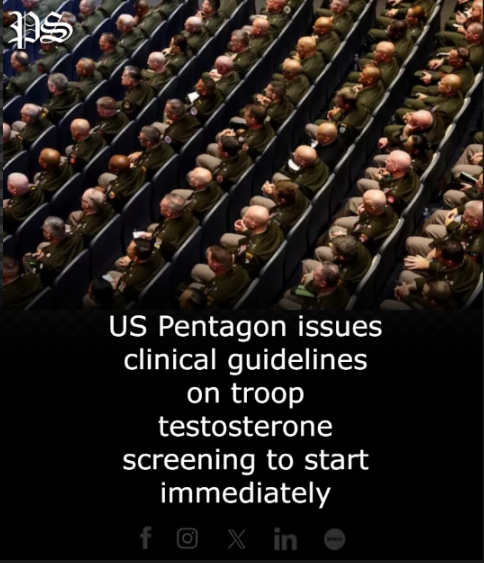
The US Pentagon has issued detailed guidance for a new, mandatory testosterone deficiency screening policy for active-duty and reserve service members aged 30 and older, a follow-up to US Defence Secretary Pete Hegseth’s July announcement.
The guidance, which was issued on Wednesday and is effective immediately, establishes standardised screening and treatment pathways for men and women that the Pentagon says are aimed at improving military readiness by identifying and managing hormonal and energy-availability issues.
Hegseth, who has promoted the use of testosterone, announced the mandate last month, raising questions among experts about whether there was a scientific basis for such a policy. The US Food and Drug Administration plans to hold a meeting of experts to discuss the medical use of testosterone in mid-September.
According to the guidance, men aged 30 and older will receive mandatory testosterone blood tests, while younger men will be tested only on request or if clinicians identify warning signs.
For women, the guidance does not mandate routine testosterone blood tests, but it calls for screening for fatigue and disrupted menstrual cycles that can be associated with hormonal dysregulation and conditions called low-energy availability and relative energy deficiency in sport.
The document lays out guidelines for when it is appropriate to prescribe off-label testosterone in women, namely for postmenopausal women with unusually low sexual desire.
Doctors have raised concerns that broad testosterone testing could lead to unnecessary or potentially harmful treatment, saying there is little evidence that universal screening for low testosterone among military personnel would improve US combat readiness.
About The Author