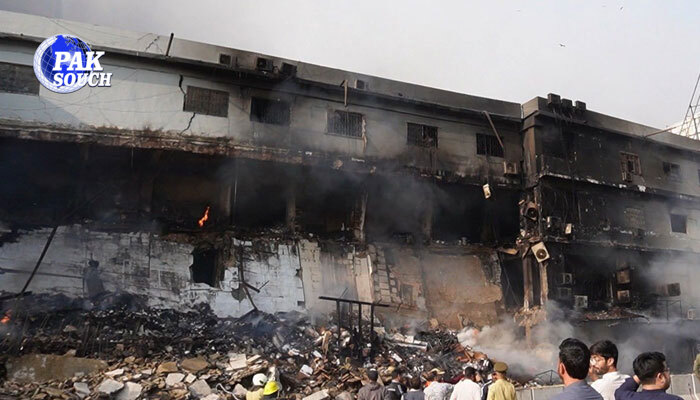
The Deputy Commissioner (DC) South has submitted a detailed response to the judicial commission investigating the tragic Gul Plaza Fire Incident in Karachi, outlining the actions taken by the district administration during the emergency and addressing key concerns raised by the commission.
According to the submitted report, the district administration was informed about the fire at Gul Plaza at approximately 10:27 AM through the Emergency Control Room and wireless coordination system. The response mechanism was activated immediately, with relevant officials mobilized to handle the situation. The DC South reached the site by 10:31 AM and remained present there to ensure coordination among various responding agencies.
The report emphasizes that the administration’s primary role was to facilitate coordination and provide logistical and administrative support during the emergency. Upon arrival, the DC established a District Emergency Operation Center at the site to streamline communication between departments and ensure that relief efforts were carried out efficiently. Close coordination was maintained with emergency services, including fire brigade units, municipal authorities, and rescue teams such as Rescue 1122.
In the response submitted to the judicial commission, the DC South stated that all necessary administrative measures were taken to assist the rescue operation. This included ensuring that emergency responders had access to the affected area and that victims received immediate assistance. The district administration maintained active communication with all relevant departments to minimize delays and improve the effectiveness of the rescue efforts.
The report also addressed traffic conditions on the day of the incident. It noted that traffic volume was slightly higher than usual, and there were initial reports of congestion. However, traffic police acted promptly to clear routes, allowing emergency vehicles—including fire brigade trucks—to reach the site without significant obstruction. This quick response was highlighted as a key factor in facilitating timely rescue operations.
The location of Gul Plaza on M. A. Jinnah Road was identified as a contributing factor to operational challenges. The road falls under the jurisdiction of municipal authorities, while adjacent internal roads are managed by local town administrations. Additionally, ongoing infrastructure developments, including the Green Line Bus Project, had reduced the effective width of the road. This narrowing increased traffic pressure during peak hours and posed challenges for emergency response vehicles navigating the area.
To manage the situation effectively, authorities implemented temporary road closures and access restrictions. Martin Road was closed from the Rampa Plaza side, while access from the Anklesaria Hospital side was limited to ensure operational safety. Law enforcement agencies controlled crowds at the scene to prevent interference with rescue activities and to maintain order.
The DC’s response clarified that certain aspects, such as building structure safety, approval of construction plans, and enforcement of building regulations, fall under the jurisdiction of separate regulatory bodies. The district administration does not directly oversee these matters but plays a supportive role in emergency management and coordination.
However, the report highlighted that fire safety audits and inspections of commercial buildings, shopping centers, and high-rise structures have been conducted in District South. These audits aim to ensure compliance with fire safety regulations and to identify potential risks before they lead to disasters. The findings of such inspections are typically shared with relevant authorities responsible for enforcement and corrective action.
The judicial commission is currently reviewing responses from multiple stakeholders to determine the causes of the incident and assess whether any negligence or lapses contributed to the severity of the fire. The DC South’s submission is part of a broader effort to establish accountability and recommend measures to prevent similar incidents in the future.
The Gul Plaza fire incident has raised serious concerns about urban safety, emergency preparedness, and regulatory enforcement in densely populated commercial areas. Incidents of this nature often expose gaps in coordination, infrastructure limitations, and compliance with safety standards.
As the investigation progresses, the commission is expected to compile findings based on testimonies and submitted reports. These findings may lead to policy recommendations aimed at improving fire safety systems, strengthening inter-agency coordination, and ensuring stricter enforcement of building codes.
Overall, the DC South’s response portrays the district administration as having acted promptly and responsibly within its defined role, focusing on coordination, logistics, and support for emergency responders. The final conclusions, however, will depend on the judicial commission’s comprehensive review of all evidence and submissions related to the incident.