


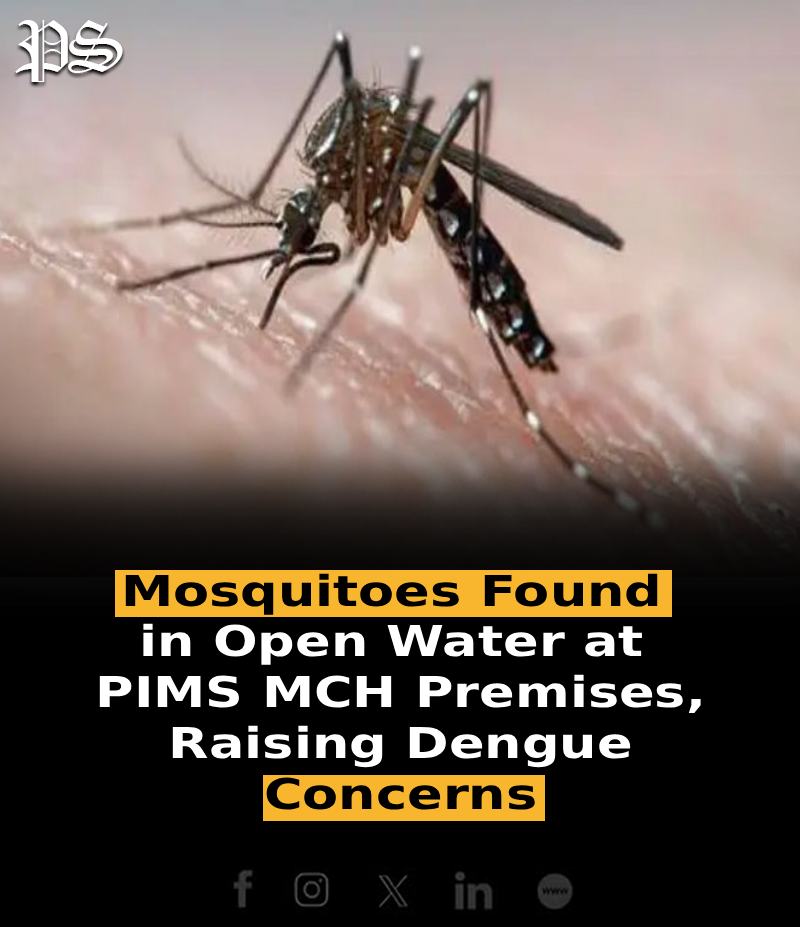
ISLAMABAD: The presence of mosquitoes and stagnant water at the Maternal and Child Health (MCH) premises of Pakistan Institute of Medical Sciences (PIMS) has raised concerns over a possible increase in dengue transmission.
According to sources within the District Health Officer (DHO) office, mosquito larvae and mosquitoes have reportedly been observed in stagnant water within the MCH premises of PIMS.
The presence of standing water at a major public hospital has raised concerns because concern among visitors because the MCH facility is frequented by pregnant women and other vulnerable patients. Any potential mosquito-breeding site within a healthcare facility stagnant water can provide suitable breeding conditions for mosquitoes, particularly during periods when dengue transmission is more likely.
Sources said that pregnant women visiting the PIMS MCH ward for medical check-ups, along with their relatives and attendants, wait in and around the premises where the stagnant water has reportedly been identified.
The situation has caused concern among visitors because the MCH facility is frequented by pregnant women and other vulnerable patients. Any potential mosquito-breeding site within a healthcare facility can create additional public-health concerns, particularly during the dengue season.
According to DHO office sources, mosquito larvae have been seen in the water accumulated within the hospital premises. The reported presence of larvae suggests that the stagnant water may be providing a breeding environment for mosquitoes.
Dengue is transmitted through the bite of infected Aedes mosquitoes. These mosquitoes can breed in relatively small collections of stagnant water, making the removal of standing water an important part of dengue prevention.
The concerns at PIMS come at a time when Islamabad and other parts of the country remain vulnerable to seasonal dengue outbreaks. Health authorities generally advise residents and institutions to eliminate stagnant water and ensure that potential mosquito-breeding sites are treated or removed.
Hospitals require particular attention because they receive large numbers of patients every day. The presence of possible mosquito-breeding sites inside hospital premises can expose patients, attendants and healthcare workers to avoidable risks.
The MCH facility is particularly sensitive because pregnant women regularly visit the ward for antenatal check-ups and other healthcare services. Relatives and attendants also spend considerable time at the facility while accompanying patients.
The reported discovery of mosquito larvae has therefore prompted concerns about whether adequate measures are being taken to prevent mosquito breeding within the hospital compound.
Health officials and hospital administration may need to take immediate steps to drain stagnant water, clean affected areas and carry out appropriate mosquito-control measures. Regular inspection of the premises can also help identify potential breeding sites before they become a larger public-health problem.
Dengue prevention generally depends heavily on environmental control. Removing standing water from open containers, drains, construction areas and other locations can reduce the number of places where mosquitoes can reproduce.
The situation at PIMS also highlights the importance of maintaining clean and safe surroundings at public hospitals. Healthcare facilities are expected to provide a hygienic environment for patients, particularly those who may already be medically vulnerable.
The presence of open or stagnant water can create multiple concerns beyond mosquito breeding. Poor drainage and standing water can also contribute to unsanitary conditions and create additional risks for patients and visitors.
According to the sources, the current weather conditions are considered particularly favourable for dengue transmission. This makes timely action more important to prevent the situation from worsening.
The reported presence of larvae means that authorities may need to conduct a detailed inspection of the entire MCH premises rather than focusing only on the area where mosquitoes have been observed.
Regular anti-dengue surveillance, larvicidal treatment where appropriate and removal of stagnant water are among the measures that can help reduce mosquito breeding.
The issue also raises questions about routine maintenance at the hospital. If water is repeatedly accumulating in open areas, improving drainage and ensuring regular cleaning could help prevent the recurrence of similar problems.
For patients and their families, particularly pregnant women visiting the MCH ward, the discovery of mosquito larvae is understandably concerning. They depend on the hospital not only for medical treatment but also for a safe and hygienic environment.
The health authorities and PIMS administration are likely to face pressure to address the reported mosquito-breeding sites promptly. Any delay could increase the risk of mosquito proliferation as the season progresses.
The concern is particularly important because dengue outbreaks can place additional pressure on already busy public healthcare facilities. Preventive action at hospitals can therefore help protect patients and staff while also reducing the potential burden on the wider healthcare system.
The reported situation at the PIMS MCH premises serves as a reminder that dengue prevention requires continuous monitoring rather than action only after cases begin to rise.
Authorities will need to ensure that stagnant water is removed, suspected breeding sites are treated and the hospital premises are regularly inspected.
With pregnant women and their attendants regularly visiting the MCH ward, maintaining a mosquito-free environment is especially important.
The reported presence of mosquito larvae and mosquitoes in stagnant water at the PIMS MCH premises has consequently raised an immediate public-health concern. Timely environmental and mosquito-control measures could help prevent the area from becoming a potential source of dengue transmission.
About The Author