Moscow: Russian President Vladimir Putin has offered to play a mediating role between Iran and Israel as tensions continue to rise across the Middle East, according to a statement released by the Kremlin. The development comes amid heightened regional instability and growing international concern over the potential for further escalation involving key regional and global actors.
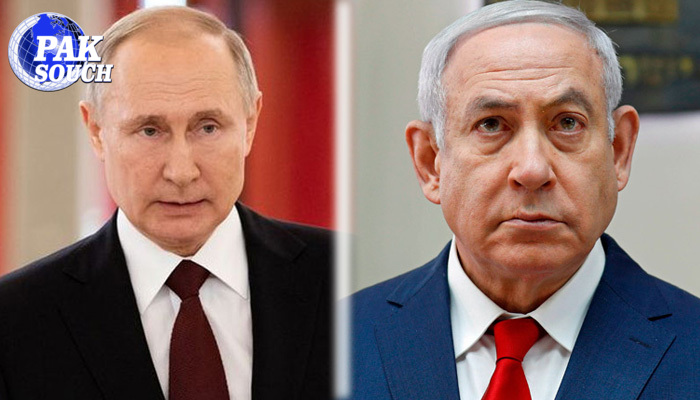
According to the Kremlin spokesperson, President Putin held separate telephone conversations with Iranian President Masoud Pezeshkian and Israeli Prime Minister Benjamin Netanyahu. During these calls, the Russian leader discussed the evolving situation in Iran and the broader Middle East, while emphasizing Russia’s willingness to contribute to de-escalation and regional stability.
In his conversation with Israeli Prime Minister Benjamin Netanyahu, President Putin held detailed discussions on the current situation related to Iran and the Middle East. The Kremlin said that during the exchange, the Russian president explicitly offered Russia’s services as a mediator on issues concerning Iran. The offer reflects Moscow’s intent to position itself as a diplomatic bridge amid strained relations between Tehran and Tel Aviv.
The Kremlin spokesperson stated that President Putin underscored the importance of dialogue and diplomatic solutions, stressing that continued confrontation could have serious consequences for regional and international security. Putin reportedly conveyed Russia’s concern over rising tensions and reiterated that political and diplomatic engagement remains the most effective path toward reducing risks of conflict.
Separately, President Putin also spoke by phone with Iranian President Masoud Pezeshkian. During that conversation, the two leaders discussed Iran’s perspective on recent regional developments as well as broader Middle East issues. While specific details of the discussion were not disclosed, the Kremlin said the call reflected Russia’s ongoing engagement with Iran as a key regional actor.
According to Russian officials, President Putin emphasized Moscow’s commitment to maintaining balanced relations with all parties involved in the Middle East. He highlighted Russia’s consistent position in favor of de-escalation, respect for sovereignty, and the avoidance of actions that could further destabilize the region.
The Kremlin spokesperson added that President Putin will continue efforts aimed at reducing tensions in the Middle East and preventing further escalation. Russia, the spokesperson said, believes that sustained diplomatic engagement and mediation can help avert conflict and create space for political solutions to long-standing disputes.
Russia has historically maintained working relations with both Iran and Israel, despite their deep-seated hostility toward each other. Moscow’s ties with Tehran have strengthened in recent years, particularly in areas such as energy cooperation, regional security, and coordination on issues related to sanctions. At the same time, Russia has also kept open communication channels with Israel, especially regarding security coordination in the region.
Analysts say Putin’s mediation offer reflects Russia’s broader strategy of asserting itself as a key diplomatic player in the Middle East at a time when traditional power dynamics are shifting. With the United States facing criticism over its role in regional conflicts and European powers focused on internal and external challenges, Moscow appears keen to expand its diplomatic influence.
The offer of mediation also comes at a sensitive moment, as tensions involving Iran and Israel have intensified due to a range of factors, including regional conflicts, security incidents, and accusations exchanged by both sides. The risk of miscalculation or escalation has raised alarm among international observers, who warn that any direct confrontation could have far-reaching consequences.
While Israel and Iran have not officially commented on Russia’s mediation offer, diplomatic sources note that both countries are likely to view the proposal through the lens of their broader strategic interests. Israel has often expressed skepticism about Iran’s intentions and remains wary of any process that could legitimize Tehran’s regional role. Iran, on the other hand, has repeatedly accused Israel of aggression and has called on international actors to restrain what it describes as Israeli provocations.
Despite these challenges, experts argue that mediation efforts, even if they do not produce immediate breakthroughs, can help lower tensions by maintaining communication channels and reducing the risk of unintended escalation. Russia’s proposal, they say, could at least serve as a platform for conveying messages and clarifying positions between the two adversaries.
The Kremlin’s statement emphasized that Russia does not seek to impose solutions but rather aims to facilitate dialogue based on mutual respect and international law. President Putin, according to officials, believes that durable stability in the Middle East can only be achieved through inclusive political processes and respect for the legitimate security concerns of all states in the region.
This is not the first time Russia has offered to mediate in Middle Eastern disputes. In the past, Moscow has positioned itself as a potential mediator in issues ranging from the Syrian conflict to tensions between regional rivals. However, the success of such efforts has often been limited by deep-rooted mistrust and competing geopolitical agendas.
Nonetheless, the latest development underscores Russia’s desire to remain actively involved in shaping regional outcomes. By engaging simultaneously with Iran and Israel, Moscow is signaling that it sees itself as a relevant and influential actor capable of speaking to all sides.
International reactions to Putin’s offer are expected to vary. Some observers may welcome any initiative aimed at reducing tensions, while others may question Russia’s neutrality given its close ties with Iran. Western governments have not yet issued official responses to the Kremlin’s announcement.
In conclusion, President Vladimir Putin’s offer to mediate between Israel and Iran highlights Russia’s efforts to play a diplomatic role in easing Middle East tensions. Through separate telephone conversations with Iranian President Masoud Pezeshkian and Israeli Prime Minister Benjamin Netanyahu, Putin reaffirmed Moscow’s commitment to dialogue and de-escalation. While the path to meaningful mediation remains uncertain, the move reflects growing international concern over regional stability and the urgent need for diplomatic solutions to prevent further conflict.