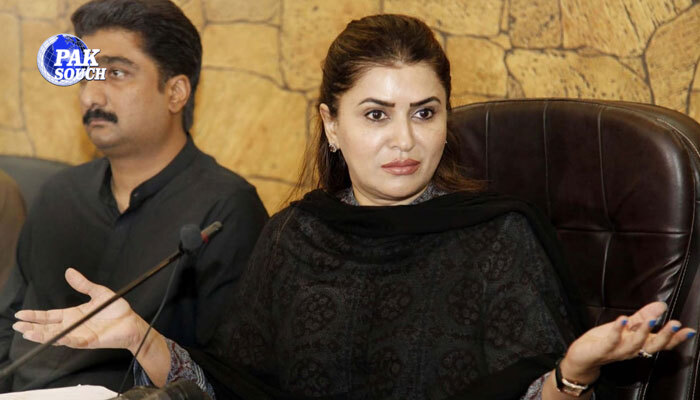
KARACHI: The Sindh High Court has dismissed a petition seeking the disqualification of Pakistan Peoples Party (PPP) MNA Shazia Marri over an alleged fake degree, delivering its decision 13 years after the petition was filed.
The court declared the petition inadmissible and ruled that, under the Constitution, the high court does not have the authority to disqualify a member of Parliament through a constitutional petition.
The case concerned allegations that Shazia Marri had used the 2002 degree of another student with the same name as her own. The petitioner’s counsel raised the allegation before the court and sought action against the PPP lawmaker on the basis of the alleged academic irregularity.
During the proceedings, the court observed that an objection of a similar nature had already been raised before an election tribunal during the 2018 general elections. The Election Commission of Pakistan (ECP) subsequently rejected the objection concerning Shazia Marri’s degree in 2022.
The Sindh High Court also noted that the election tribunal’s decision had been challenged before the Supreme Court. However, the appeal filed against the tribunal’s decision was withdrawn in 2023 and was subsequently dismissed.
Shazia Marri’s counsel argued that the issue concerning her degree had already been examined before the Election Commission and that evidence relating to the matter had been presented before the relevant forum. He maintained that the Election Commission had already rejected the petition concerning her educational qualification.
The court, while examining the legal position, observed that constitutional provisions do not give the high courts the authority to declare a parliamentarian disqualified merely through such a petition.
The Sindh High Court further stated that the authority to determine whether a person meets the constitutional standards of being “Sadiq and Ameen” does not rest with the courts in the manner claimed by the petitioner. The court emphasized that disqualification of an elected representative requires proceedings before the appropriate constitutional or judicial forum and cannot be based solely on a constitutional petition filed before a high court.
The court also referred to directions and precedents of the Supreme Court while reaching its conclusion. In light of those orders, it held that the petition was not maintainable.
The decision brings to an end, at the Sindh High Court level, a legal dispute that had remained pending for approximately 13 years. The case had attracted attention because it involved allegations regarding the authenticity of the academic qualification of a sitting parliamentarian.
The petitioner had sought the disqualification of Shazia Marri on the grounds that she allegedly used another student’s degree issued in 2002. The allegation was contested, while the matter subsequently came before election authorities and courts at different stages.
The court’s decision makes clear that the issue of a parliamentarian’s eligibility and disqualification must be addressed through the legal mechanisms provided under the Constitution and relevant election laws. A high court cannot simply declare an elected member of Parliament disqualified on the basis of a constitutional petition when the law provides specific forums and procedures for determining such questions.
The Election Commission had already considered and rejected the objection concerning Shazia Marri’s degree in 2022. The election tribunal had also previously dealt with a similar objection during the 2018 elections.
The subsequent appeal before the Supreme Court was withdrawn in 2023, after which it was dismissed. These developments were taken into consideration by the Sindh High Court while deciding the long-pending petition.
The court therefore concluded that the petition could not be entertained in view of the constitutional framework and the Supreme Court’s relevant orders.
The ruling does not amount to a fresh determination of the authenticity of the degree by the Sindh High Court. Rather, the court’s decision primarily concerns the maintainability of the petition and the constitutional jurisdiction of the high court to disqualify a member of Parliament in the circumstances presented before it.
The dismissal of the petition means that the 13-year-old case has been rejected as inadmissible. The court’s detailed observations also underline the importance of approaching the competent constitutional and electoral forums in cases involving allegations against elected representatives.
Shazia Marri, a senior PPP politician and member of the National Assembly, has remained active in national politics and has held several important positions. The allegations concerning her degree have previously been considered by election authorities, and the latest Sindh High Court ruling has now addressed the pending petition against her.
The case demonstrates how electoral disputes can remain in litigation for extended periods and may pass through several legal forums before reaching a final stage. In this case, the matter had been pending before the Sindh High Court for around 13 years.
With the petition now dismissed, the court has clarified that it lacked the constitutional authority to grant the requested disqualification through the petition. It also relied on the previous proceedings before the Election Commission, the election tribunal and the Supreme Court.
The Sindh High Court’s decision is therefore significant from a legal perspective because it reiterates that the disqualification of a member of Parliament cannot be sought through a procedure that is not sanctioned by the Constitution or applicable law. The court held that, in light of Supreme Court directions, the petition was not maintainable and accordingly rejected it.
About The Author