


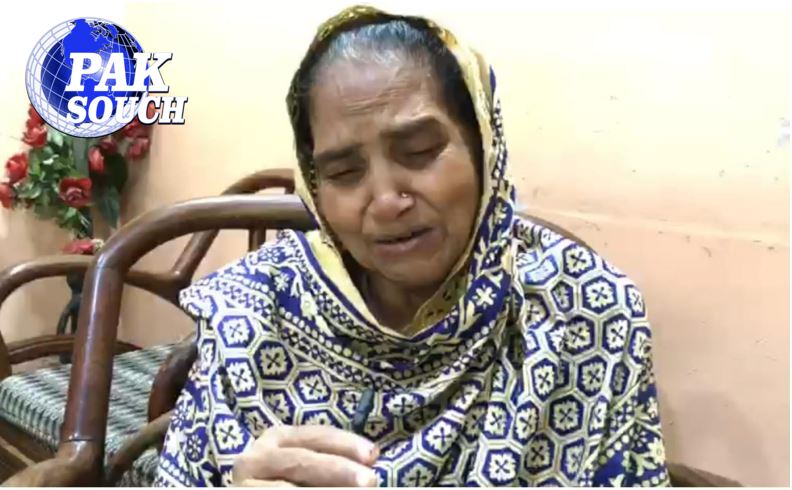
SUKKUR (Bureau Report): An elderly woman, identified as Shamim Iqbal Ansari, a resident of Baban Shah Graveyard area of Old Sukkur, staged a protest outside the Sukkur Press Club against what she alleged was continued violence, mistreatment, harassment and injustice by her two sons and their wives.
Speaking to the media during the protest, the distressed woman, with tears in her eyes, described the alleged hardships she has been facing and appealed to the authorities to take immediate notice of her situation and provide her with protection and justice.
Shamim Iqbal Ansari said that her husband, Muhammad Iqbal Ansari, passed away around five years ago. She alleged that after his death, her two sons, Adil Ansari and Rais Ansari, had made her life extremely difficult.
According to her, she is allegedly subjected to physical abuse on a regular basis. She claimed that at times her sons themselves beat her, while on other occasions their wives also allegedly mistreat and assault her.
The elderly woman further alleged that her sons neither provide her with adequate food nor give her money for her daily expenses. She said she is allegedly subjected to abusive and insulting language and is frequently accused of various things, causing her severe mental distress and emotional suffering.
Shamim Ansari also alleged that she was recently beaten and pushed out of her home, leaving her helpless and without proper support. She said she had repeatedly apologized to her sons in an effort to prevent further conflict and maintain peace within the family, but despite her efforts, the alleged violence and mistreatment had continued.
She further stated that the electricity connection to the room where she is currently living has allegedly been disconnected, creating additional difficulties for her. The woman said she also suffers from a heart condition and that the ongoing circumstances are causing her both physical and mental suffering.
According to Shamim Ansari, some residents of the neighborhood occasionally provide her with food and other essential items on humanitarian grounds. She said she is somehow managing to survive with their help, but living without permanent financial and family support has become extremely difficult for her.
During the protest, the elderly woman appealed to the Chief Justice of Pakistan, Sindh Chief Minister, Inspector General of Sindh Police, DIG Sukkur and SSP Sukkur, as well as other relevant authorities, to take immediate notice of her complaint and provide her with protection.
She demanded that legal action be taken against those responsible for the alleged violence and mistreatment. She also urged the authorities to ensure that her two sons provide her with regular financial support for her daily needs in accordance with the law.
The protesting woman further appealed to the authorities to ensure that neither her sons nor their wives subject her to alleged physical violence, verbal abuse or any other form of mistreatment in the future.
Shamim Iqbal Ansari called for immediate legal and administrative assistance so that she could live a safe and dignified life and remain protected from further alleged abuse.
About The Author