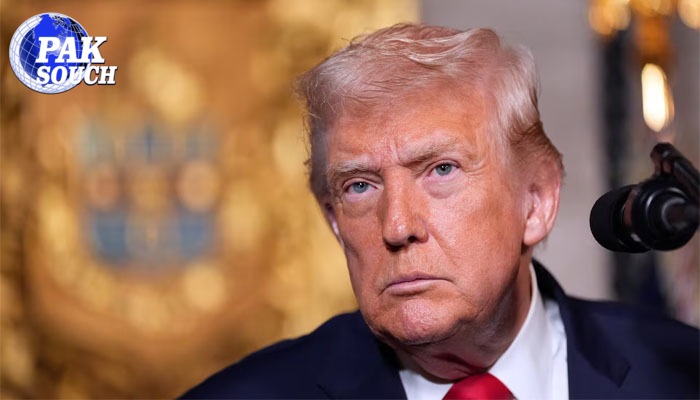
Former US President Donald Trump has said that the United States is ready to support protesters in Iran, claiming that the country is witnessing an unprecedented push toward freedom. His remarks come amid ongoing violent protests across Iran, which have now entered their thirteenth consecutive day, resulting in dozens of deaths, mass arrests, and widespread disruptions, including a nationwide internet shutdown.
In a message shared on social media, Trump stated that Iran is “looking toward freedom like never before,” suggesting that the current wave of protests represents a turning point in the country’s political and social landscape. He added that the United States stands ready to assist Iranian demonstrators, signaling moral and political backing for the protest movement.
“We are ready to help the protesters in Iran,” Trump said in his statement, without providing specific details on the nature of the support. His comments have drawn significant international attention, particularly given the long history of strained relations between Washington and Tehran.
This is not the first time Trump has spoken about the situation in Iran in strong terms. In an earlier statement, he warned that if people were killed by Iranian authorities during the protests, the United States would intervene. However, he clarified that such intervention would not involve deploying American troops on Iranian soil. “Intervention does not mean sending the military into Iran,” he said, attempting to dispel speculation about direct military action.
Trump further claimed that the US is closely monitoring developments inside Iran. According to him, it appears that protesters have effectively taken control of some cities, a sign, he said, of the government’s weakening grip. He accused the Iranian leadership of mistreating its citizens for years and suggested that the current unrest is a consequence of those policies. “The Iranian government treated its people badly for years, and today they are facing the results of their actions,” he said.
The situation inside Iran remains tense and volatile. Protests, many of which have turned violent, have continued for nearly two weeks, spreading across multiple cities and regions. According to available reports, at least 65 people have been killed so far, including 15 security personnel. The death toll reflects the intensity of clashes between protesters and security forces, as well as the scale of the unrest.
Iranian media outlets report that security forces have launched large-scale operations to regain control and suppress what authorities describe as violent and armed unrest. In one recent development, security forces reportedly arrested around 100 armed individuals from a town near Tehran. Overall, more than 2,500 people have been detained since the protests began, according to official and semi-official sources.
The Iranian government has also imposed strict measures to limit communication and coordination among protesters. Internet services across the country have been suspended for a third consecutive day, significantly restricting access to social media platforms, messaging apps, and international news. Such shutdowns have been a recurring tactic during periods of unrest in Iran, aimed at curbing the spread of protest-related information and organizing efforts.
Human rights organizations and international observers have expressed concern over the rising death toll, mass arrests, and restrictions on freedom of expression. They have called on Iranian authorities to exercise restraint and respect the rights of citizens to peaceful assembly and protest. At the same time, Tehran has accused foreign powers of fueling unrest and interfering in its internal affairs.
Trump’s remarks are likely to add another layer of complexity to an already sensitive situation. Iranian officials have historically viewed statements of support for protesters from US leaders as evidence of foreign meddling. In the past, Tehran has accused Washington of exploiting internal challenges to destabilize the country.
Analysts say Trump’s comments are consistent with his earlier hardline stance on Iran during his presidency, when relations between the two countries deteriorated sharply. His administration withdrew from the 2015 nuclear deal, reimposed severe economic sanctions, and adopted a policy of “maximum pressure” against Tehran. Support for Iranian protesters was also a recurring theme in Trump’s rhetoric during previous waves of unrest.
However, experts caution that public declarations of support from US leaders can have mixed effects. While such statements may encourage protesters by drawing global attention to their cause, they can also be used by authorities to justify crackdowns by framing protests as foreign-backed conspiracies.
The current protests in Iran are among the most prolonged and widespread in recent years, reflecting deep-rooted public frustration over political, economic, and social issues. Rising living costs, unemployment, restrictions on freedoms, and long-standing grievances against the ruling establishment are widely seen as key factors driving the unrest.
Despite the government’s efforts to contain the situation through arrests, security operations, and communication blackouts, demonstrations have continued in several areas. Videos and reports, though limited due to the internet shutdown, suggest that tensions remain high, with sporadic clashes and acts of defiance reported across the country.
The international community is watching developments closely. While some countries have urged restraint and dialogue, others have focused on the humanitarian and human rights dimensions of the crisis. The coming days are expected to be critical in determining whether the protests escalate further or gradually subside under pressure from the authorities.
As unrest persists, Trump’s assertion that Iran is moving toward freedom underscores the sharply different narratives surrounding the crisis. For protesters and their supporters, the demonstrations represent a struggle for rights and accountability. For the Iranian government, they are seen as a threat to stability and national security.
With dozens dead, thousands detained, and communication severely restricted, the situation in Iran remains fluid and unpredictable. Whether external statements of support will influence events on the ground remains uncertain, but they have undeniably intensified global attention on a country already at the center of international scrutiny.