

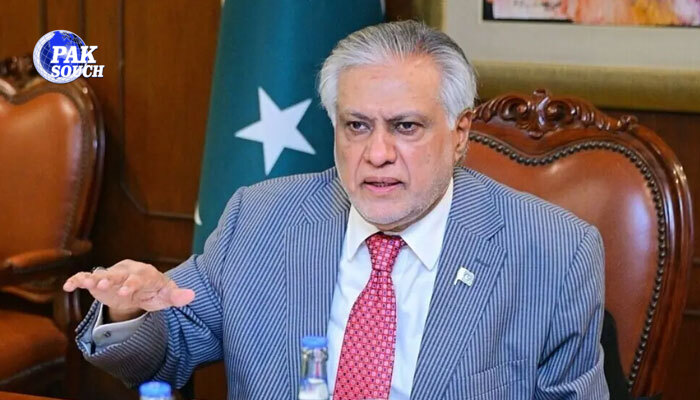
Deputy Prime Minister and Foreign Minister Ishaq Dar has shared details of the recently concluded Makkah Mutual Defense Agreement between Pakistan, Saudi Arabia and Türkiye, saying that the agreement is fully aligned with the fundamental pillars of Pakistan’s foreign policy.
Deputy Prime Minister and Foreign Minister Ishaq Dar has shared key points and background information about the Makkah Mutual Defense Agreement recently concluded between Pakistan, Saudi Arabia and Türkiye.
In a statement posted on social media, Ishaq Dar said that, given the discussion and widespread interest surrounding the Makkah agreement over the past two days, it would be useful to provide the public with greater clarity regarding its background, objectives and key provisions.
Background of the Makkah Agreement
According to Ishaq Dar, the Makkah Mutual Defense Agreement was concluded between Pakistan, Saudi Arabia and Türkiye on Friday, August 7, 2026, in Makkah, reflecting the depth of the fraternal relations between the leadership and people of the three countries.
The foreign minister said the agreement was the outcome of several years of negotiations, consultations and discussions among the three countries.
Its objective is to strengthen strategic cooperation in order to address various challenges to peace and security while promoting peace, stability and prosperity in the region.
The agreement represents another step in the development of relations between Pakistan, Saudi Arabia and Türkiye and provides a framework for closer cooperation in defense and security-related matters.
Ishaq Dar emphasized that Pakistan remains committed to working with all brotherly countries in the region to promote lasting peace, stability and prosperity.
Existing Agreements Remain Intact
The deputy prime minister clarified that the Makkah agreement does not cancel, replace or modify any bilateral or multilateral agreements that already exist between the three participating countries or between any of them and other countries or international organizations.
This means that the agreement is intended to complement existing diplomatic and security arrangements rather than replace previously established commitments.
The clarification is significant because Pakistan, Saudi Arabia and Türkiye each maintain a range of bilateral and multilateral relationships with other countries and international organizations.
According to the foreign minister, the new agreement should therefore be viewed within the broader framework of the three countries’ existing international commitments.
Collective Defense Provision
One of the most important provisions of the Makkah agreement concerns the response to an external armed attack.
According to the agreement, an external armed attack against any one of the three countries will be considered an attack against all three countries.
Ishaq Dar said this principle is consistent with the inherent right of individual and collective self-defense recognized under Article 51 of the United Nations Charter.
The provision establishes a principle of collective defense among Pakistan, Saudi Arabia and Türkiye while emphasizing that the agreement operates within the framework of international law.
The collective-defense clause is being presented as a mechanism for strengthening deterrence and security cooperation among the three participating countries.
Agreement Is Defensive in Nature
Ishaq Dar stressed that the Makkah agreement is purely defensive in nature.
He said the agreement is not directed against any particular country and that its sole purpose is to strengthen ongoing efforts to promote peace, stability and prosperity in the region.
The clarification appears aimed at addressing concerns that the agreement could be interpreted as forming an alliance against a particular regional or international power.
According to the foreign minister, the agreement should instead be understood as a framework designed to enhance cooperation and collective security among its participants.
The three countries have maintained that their strategic cooperation is intended to contribute to regional stability rather than create confrontation.
Open to Other Countries
Another important aspect highlighted by Ishaq Dar is that the Makkah agreement is not necessarily limited permanently to its original three signatories.
According to the statement, the agreement remains open to all countries in the region that are willing to respect its fundamental principles.
Countries seeking to join would be expected to adhere to the principles of mutual respect, cooperation and the peaceful resolution of disputes.
This provision potentially gives the agreement a broader regional dimension.
The emphasis on peaceful dispute resolution also indicates that the agreement is intended to support diplomatic engagement and stability alongside defense cooperation.
Commitment to Regional Peace
Ishaq Dar said Pakistan wants to continue working with all brotherly countries in the region to achieve lasting peace and stability.
He presented the Makkah agreement as consistent with Pakistan’s broader foreign-policy objectives and its desire to strengthen relations with neighboring and regional countries.
The agreement, according to the foreign minister, seeks to combine strategic cooperation with a commitment to peace and prosperity.
Its stated focus on mutual defense, regional stability and peaceful dispute resolution reflects the three countries’ stated intention to deepen their strategic partnership while maintaining their existing international commitments.
A New Framework for Strategic Cooperation
The Makkah Mutual Defense Agreement represents a new framework for security cooperation between Pakistan, Saudi Arabia and Türkiye.
Its collective-defense provision, compatibility with Article 51 of the UN Charter, defensive character and openness to other regional countries are among the key elements highlighted by Ishaq Dar.
The foreign minister’s detailed explanation comes amid considerable public and international interest in the agreement since its signing in Makkah.
By sharing the agreement’s background and key provisions, the Pakistani government has sought to clarify its purpose and reassure regional and international observers that the pact is intended to strengthen defense cooperation without targeting any particular country.
Pakistan, Saudi Arabia and Türkiye are expected to continue consultations under the framework of the agreement while maintaining their existing bilateral and multilateral relationships.
Ishaq Dar reiterated that Pakistan remains committed to working alongside regional partners for lasting peace, stability and prosperity, describing the Makkah agreement as fully consistent with the country’s core foreign-policy principles.
About The Author