

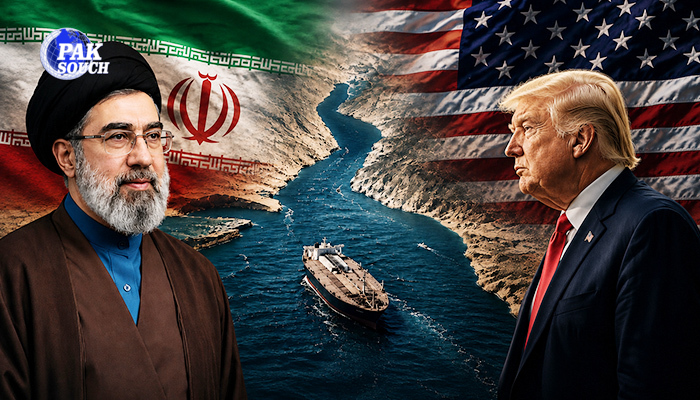
Iran has presented six conditions to the United States for the complete reopening of the strategically important Strait of Hormuz, saying the waterway will not be fully reopened unless Washington changes its approach.
Iran has reportedly presented six conditions to the United States for the complete reopening of the Strait of Hormuz, amid continuing tensions between Tehran and Washington.
According to a statement issued by Zolqadr, Secretary of Iran’s Supreme National Security Council, Tehran has laid out a number of demands that it considers necessary before the waterway can be fully reopened.
The conditions include guarantees against threats or insults toward Iran, an end to the war imposed on Iran and its allies, the lifting of the naval blockade, the withdrawal of US forces from areas surrounding Iran, compensation for damage caused to Iran, and the removal of sanctions imposed on the Iranian people.
Six Conditions Presented by Iran
According to the statement, Iran’s first condition is that the country must never again be threatened by the United States, regardless of the language or manner in which such threats are made.
The statement also demanded that the Iranian nation not be insulted or humiliated.
Another major condition is that the war imposed on Iran and its allies must be ended permanently. Tehran has emphasized that it expects an enduring end to hostilities rather than a temporary pause.
Iran has also demanded an end to what it described as a naval blockade of the country.
The fourth condition includes the withdrawal of US forces from areas surrounding Iran. Tehran has maintained that the presence of American military forces in the region contributes to tensions and insecurity.
Compensation for Damage
Iran has further demanded full compensation for the damage it says has been inflicted upon the country.
According to the statement from the Supreme National Security Council secretary, compensation must be provided without any reduction.
The demand reflects Tehran’s position that the United States should bear financial responsibility for losses resulting from the conflict and related military actions.
Iran has also called for the removal of what it describes as unfair and illegal sanctions imposed on the Iranian people.
The statement said that sanctions affecting Iran’s economy and population should be lifted as part of any arrangement leading to the reopening of the Strait of Hormuz.
Release of Frozen Iranian Assets
The sixth demand concerns Iranian assets held or frozen abroad.
According to the statement, Iran wants the country’s assets that have been frozen to be released unconditionally.
Tehran has repeatedly objected to restrictions placed on its financial resources and has argued that access to frozen assets is an important part of resolving its disputes with Western countries.
The six conditions therefore cover military, political and economic issues, indicating that Iran’s position on the Strait of Hormuz is closely linked to broader tensions with the United States.
Warning Over the Strait of Hormuz
The Secretary of Iran’s Supreme National Security Council warned that if the United States does not change its approach, the Strait of Hormuz will not be reopened.
He said Iran would not retreat from its objectives, whether the situation develops into war or negotiations.
The statement suggests that Tehran views control over the waterway as an important strategic issue and intends to use its position to press for changes in US policy.
The Strait of Hormuz is one of the world’s most strategically important maritime routes because a significant portion of global energy supplies passes through the waterway.
Any prolonged disruption to shipping through the strait could therefore have implications for international energy markets, oil supplies and global trade.
Temporary Shipping Route Under Discussion
Earlier, Iranian Foreign Minister Abbas Araghchi said Tehran was close to reaching an agreement with Oman regarding a temporary maritime route through the Strait of Hormuz.
Araghchi said Iran’s armed forces had also prepared a new route in the area.
However, he stressed that the creation of a new or temporary route should not be interpreted as meaning that the Strait of Hormuz had been fully reopened.
According to the foreign minister, the reopening of the waterway would depend on a number of other factors.
His comments indicate that Iran is considering limited arrangements for maritime movement while maintaining that a full reopening requires broader political and security conditions to be addressed.
Iran Accuses US of Violating Understanding
Araghchi also said that the United States must address what Iran considers violations of a memorandum of understanding.
According to the Iranian foreign minister, the current situation was the result of alleged violations of that understanding by Washington.
He argued that the United States must take steps to rectify those violations before progress can be made toward resolving the current crisis.
Iran’s position therefore links the issue of maritime access through the Strait of Hormuz to wider disagreements with Washington.
Broader Regional Implications
The developments surrounding the Strait of Hormuz are being closely watched because of the waterway’s importance to global shipping and energy supplies.
Iran’s six conditions indicate that Tehran is seeking significant political, military and economic concessions before agreeing to a complete reopening.
While Iran has discussed a temporary shipping route with Oman, Iranian officials have made clear that such an arrangement would not necessarily amount to a full reopening of the strait.
For now, Tehran has warned that the waterway will remain closed unless the United States changes its approach and addresses Iran’s demands.
The situation remains dependent on diplomatic developments, negotiations and the broader security environment in the region. Any agreement between Iran and the United States could have significant consequences not only for the two countries but also for regional stability, international shipping and global energy markets.
About The Author