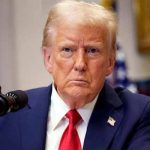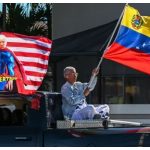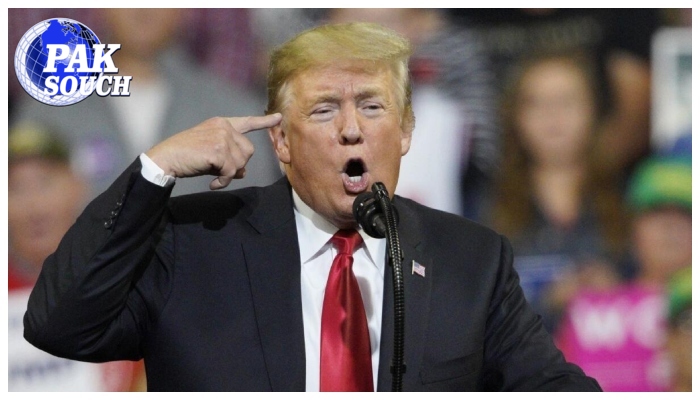
Washington: According to a report by Time magazine, President Donald Trump began 2026 with a shocking and highly controversial military operation, ordering the arrest of Venezuelan leader Nicolás Maduro — a move that has reignited global concerns about the risks of foreign intervention embedded in U.S. foreign policy under his leadership.
The action came at a sensitive moment for Trump, as he has reportedly been seeking to rebuild and strengthen his international image after failing to win the Nobel Peace Prize in 2025. Instead of reinforcing his long-standing claim of being an “anti-war” president, the dramatic operation in Caracas appeared to confirm that Trump is once again embracing the same hardline, interventionist approach he once criticized during his political campaigns.
The arrest of Maduro not only stunned Latin America but also sent ripples across the international community, triggering fears that other countries could soon find themselves in Washington’s crosshairs. Analysts say the move reflects a broader shift in Trump’s strategy — from diplomatic pressure and sanctions toward direct and coercive actions designed to demonstrate strength, restore deterrence, and project U.S. dominance on the global stage.
The Time report notes that Trump’s decision-making appears heavily influenced by his desire to shape a legacy defined by decisive action rather than restraint. The Venezuela operation has therefore prompted renewed speculation over which countries could emerge as the next potential targets of U.S. pressure, threats, or even military intervention.
Colombia emerges as a key concern. Relations between President Trump and Colombian President Gustavo Petro have already been strained. Trump has publicly accused Petro of being linked to illegal drug networks — an allegation strongly denied by the Colombian government. In recent statements, Trump has warned that Colombia could face consequences if it fails to curb drug trafficking, with some U.S. commentators interpreting his remarks as thinly veiled threats of possible military or security operations.
Given Colombia’s strategic importance in the region and its long history of cooperation with the United States, any escalation would mark a dramatic shift in bilateral relations. Experts caution that even rhetorical threats could destabilize an already fragile regional balance and undermine years of counter-narcotics collaboration.
Cuba remains another potential flashpoint, though Trump’s messaging has been inconsistent. At times, he has described Cuba as a “failed state” on the verge of collapse, while at other moments he has suggested that direct intervention is unnecessary, arguing that the system will fall on its own. This contradictory stance has left observers uncertain whether Cuba is a serious target or merely a rhetorical tool in Trump’s broader narrative against socialist governments.
However, analysts note that Trump has historically favored aggressive policies toward Havana, including sanctions and diplomatic isolation. In the wake of the Venezuela operation, fears have grown that Cuba could once again be subjected to heightened pressure or covert actions aimed at accelerating regime change.
Greenland has also returned to the spotlight. Trump’s long-standing interest in acquiring Greenland — a semi-autonomous territory of Denmark — has resurfaced following the Venezuela operation. The renewed discussion has alarmed European leaders, particularly Danish Prime Minister Mette Frederiksen, who has categorically rejected any notion of Greenland being absorbed into the United States.
While Greenland is not a conventional military target, analysts say Trump’s revived interest underscores a broader mindset: one that views territorial expansion and strategic acquisition as legitimate tools of power politics. The idea, once dismissed as unrealistic, is now being reassessed in light of Trump’s demonstrated willingness to take extraordinary and unconventional actions.
Beyond specific countries, the Venezuela operation has raised deeper concerns about Trump’s overall approach to global affairs. Critics argue that his actions reflect a belief that dramatic interventions can restore American credibility and deter rivals. Supporters, on the other hand, claim that decisive moves are necessary to confront what they see as weak or hostile governments that threaten U.S. interests.
The Time report highlights that Trump’s actions are also shaped by domestic political considerations. After missing out on the Nobel Peace Prize, he is reportedly eager to reframe himself as a strong global leader capable of reshaping international order. This ambition, analysts warn, could increase the likelihood of risky foreign policy decisions designed to capture headlines rather than build sustainable peace.
International reaction to the Venezuela operation has been mixed. Some governments have condemned it as a violation of sovereignty and international law, while others have remained cautious, waiting to see whether the move represents a one-off action or the beginning of a broader pattern.
Security experts caution that if Trump continues down this path, the world could enter a period of heightened uncertainty, particularly for countries perceived as defying U.S. influence or aligning with rival powers. Latin America, already shaken by events in Venezuela, is watching closely for signs of further escalation.
In conclusion, while Venezuela was the first major shock of 2026, it may not be the last. Colombia, Cuba, and even territories like Greenland have all been drawn into renewed speculation about Trump’s next moves. Whether these concerns materialize into concrete actions remains to be seen, but one thing is clear: Trump’s return to hardline interventionism has reopened a debate about the limits of U.S. power and the stability of the international system in the years ahead.