



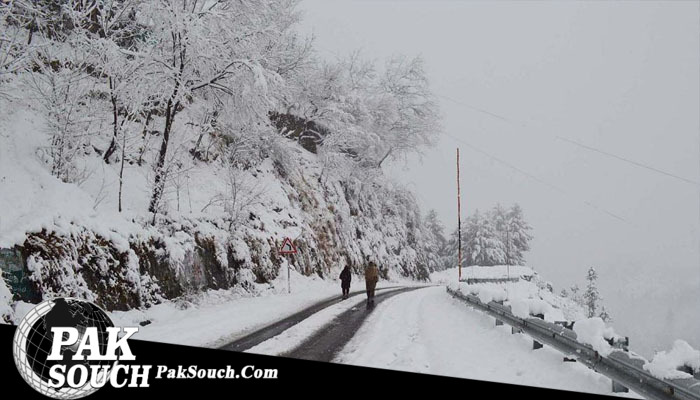
Intermittent snowfall continues across the mountainous regions of Khyber Pakhtunkhwa, Azad Kashmir, and Gilgit-Baltistan, transforming valleys and hilltops into picturesque winter landscapes. The fresh spell of snow, accompanied by rain in lower areas, has led to a sharp drop in temperatures, intensifying cold weather conditions while also attracting tourists to popular northern destinations.
In Khyber Pakhtunkhwa, snowfall has been reported in several high-altitude areas, bringing both beauty and challenges for residents and travelers. The district of Dir witnessed increased tourist activity as visitors headed toward the Lowari Tunnel to enjoy the winter scenery. Snow-covered mountains and roads offered breathtaking views, with tourists stopping to take photographs and experience the season’s charm.
The scenic regions of Swat, Kalam, Malam Jabba, and surrounding areas experienced significant snowfall, resulting in a blanket of white covering hills, forests, and rooftops. The snowfall enhanced the natural beauty of these popular tourist destinations, making them a major attraction for visitors seeking winter recreation. However, local authorities have advised tourists to remain cautious, as slippery roads and reduced visibility can pose risks, especially during nighttime travel.
In Abbottabad and various parts of the Galiyat region, light rainfall was recorded instead of snowfall. Despite being less intense, the rain caused a noticeable decline in temperatures, increasing the chill factor across the region. Cold winds, combined with damp weather, made conditions feel colder than usual. Residents reported a significant rise in heating needs, while authorities urged people to take precautionary measures to avoid cold-related health issues.
Meanwhile, several districts across Khyber Pakhtunkhwa, including Peshawar, also experienced rainfall. The showers brought temporary relief from dry weather but contributed to colder conditions across the province. Meteorological officials noted that the ongoing weather system is responsible for both rain in plains and snow in mountainous regions, a pattern commonly observed during winter months.
In Azad Kashmir, snowfall has continued in the upper reaches of Neelum Valley, turning the region into a winter wonderland. Upper Neelum, Arang Kel, and nearby areas have been receiving intermittent snowfall, with valleys, trees, and roads completely covered in snow. The continuous snowfall has added to the region’s scenic appeal but has also created challenges for local communities, particularly in terms of transportation and access to essential supplies.
Residents of Neelum Valley reported that snow accumulation has increased significantly in higher elevations, occasionally disrupting road connectivity. Local administration and disaster management authorities are monitoring the situation closely to ensure that roads remain open and that emergency services are available if required. Travelers heading to these areas have been advised to check road conditions and weather forecasts before departure.
In Gilgit-Baltistan, snowfall has been reported in the upper areas of Chilas since last night. The persistent snow has further intensified the cold, with temperatures dropping well below freezing in some locations. The harsh winter conditions are typical for the region at this time of year, but fresh snowfall has heightened the need for adequate heating, warm clothing, and preparedness among residents.
Authorities in Gilgit-Baltistan have issued advisories urging people living in remote and high-altitude areas to remain vigilant. Snowfall can lead to road blockages, power disruptions, and difficulties in communication, especially in areas that are already vulnerable due to geography. Local administrations are working to ensure that snow-clearing equipment and emergency response teams remain on standby.
Despite the challenges, the snowfall has been welcomed by many, particularly those associated with tourism and winter sports. Ski resorts and hill stations in areas such as Malam Jabba are expected to see increased visitor numbers, as snowfall creates ideal conditions for winter recreation. Hoteliers and tour operators have expressed optimism that the fresh snow will boost tourism, which is a vital source of income for many local communities.
Meteorological experts have indicated that the current weather pattern may continue intermittently over the coming days. They have advised residents and tourists alike to remain updated with official forecasts and warnings. Drivers traveling through mountainous routes have been urged to carry chains, ensure vehicles are in good condition, and avoid unnecessary travel during heavy snowfall.
Health officials have also cautioned people, particularly the elderly and children, to take protective measures against extreme cold. Prolonged exposure to low temperatures can lead to hypothermia and other cold-related illnesses. Citizens have been advised to keep themselves warm, use heaters safely, and avoid carbon monoxide risks by ensuring proper ventilation.
Overall, the ongoing snowfall across Khyber Pakhtunkhwa, Azad Kashmir, and Gilgit-Baltistan has once again highlighted the dual nature of winter in Pakistan’s northern regions. While the snow-covered landscapes offer stunning beauty and tourism opportunities, they also demand preparedness, caution, and effective management to minimize risks. As winter tightens its grip, authorities and residents alike are bracing for colder days ahead, hoping to balance safety with the enjoyment of nature’s seasonal splendor.





