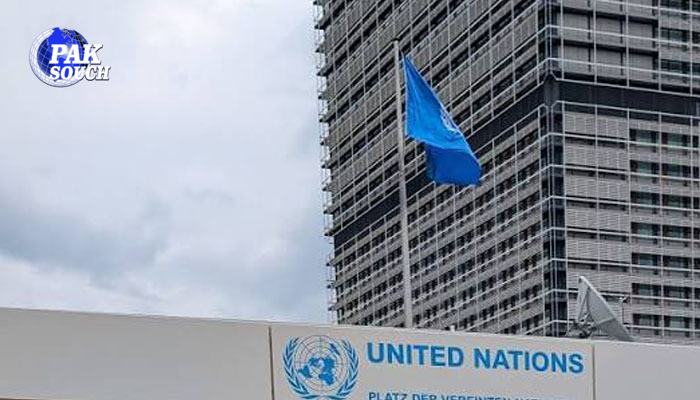
Islamabad, Pakistan: The United Nations Development Programme (UNDP) has urged Pakistan to review its current system for distributing resources among the provinces, warning that the country faces a significant gap between development policies and their effective implementation at the grassroots level.
The remarks were made during a strategic dialogue titled “A Nation at a Turning Point: Pakistan’s Population and Development”, organized by the Ministry of Planning, Development and Special Initiatives. The event also marked the launch of the 50th edition of the Development Advocate Pakistan publication.
Addressing the gathering, Federal Minister for Planning Ahsan Iqbal said Pakistan has entered a critical phase in its development journey, emphasizing the need for long-term planning and effective implementation to achieve sustainable economic and social progress.
During the event, the UNDP highlighted that while Pakistan has formulated several development policies, there remains a considerable disconnect between policy design and execution at the local level. According to the organization, bridging this implementation gap is essential to ensure that development initiatives deliver tangible benefits to communities across the country.
The UNDP also recommended a review of the current provincial resource allocation mechanism, suggesting that the distribution of funds should not rely solely on population size. Instead, it proposed incorporating additional indicators such as development performance, governance outcomes, institutional capacity, and other socio-economic factors to create a more balanced and effective allocation system.
According to the UNDP, a revised framework could encourage better governance, improve accountability, and promote more equitable development among Pakistan’s provinces.
The organization stressed that effective resource distribution is vital for addressing regional disparities and ensuring that all provinces have the capacity to invest in infrastructure, education, healthcare, and other essential public services.
The strategic dialogue brought together policymakers, development experts, and representatives from national and international organizations to discuss Pakistan’s demographic trends and development priorities. Participants explored ways to align population policies with economic planning to maximize the country’s development potential.
Officials at the event emphasized that Pakistan’s growing population presents both opportunities and challenges. They noted that investments in education, employment, skills development, and healthcare are essential to transform demographic growth into sustainable economic progress.
The discussions also underscored the importance of strengthening coordination between federal and provincial governments, improving institutional performance, and ensuring that development policies are implemented efficiently at every administrative level.
The UNDP reiterated that Pakistan’s future development success will depend not only on well-designed policies but also on effective governance, evidence-based planning, and a resource allocation system that reflects broader development needs alongside population figures.
About The Author