


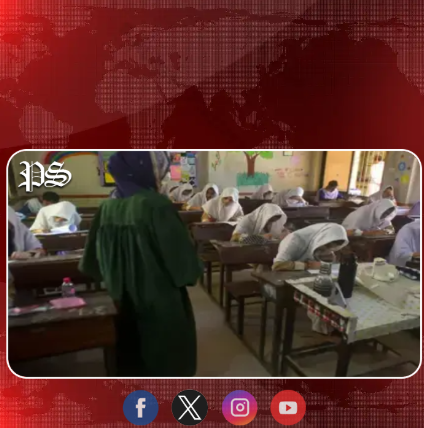
The Directorate of College Education, Karachi region on Thursday issued a circular telling employees to comply with the dress code, saying that casual or inappropriate attire was “inconsistent with professional standards”.
According to a circular issued by the Directorate of College Education on Thursday, available with Dawn, it was observed “with serious concern” that some employees, particularly male staff, were reporting for duty in casual or “inappropriate attire”. This included T-shirts, jeans, “tight-fitting clothing”, slippers and “fancy sunglasses”.
The notification said, “Such attire is inconsistent with the professional standards expected in government educational institutions and shall not be permitted during official working hours”.
Under the prescribed dress code, male teaching staff, particularly those serving in government girls’ colleges, were told to wear “decent and formal attire”, preferably a full-sleeved shirt with formal trousers or traditional shalwar kameez. Teachers were also advised to wear an academic gown with proper formal shoes while delivering lectures.
Female teaching staff were told to wear “decent, modest and professional attire” appropriate to an educational institution.
The notification said that “their dress should reflect the dignity of the teaching profession and help maintain a respectful academic environment”. They were also advised to wear an academic gown with formal shoes while delivering lectures.
For non-teaching staff, especially those serving in government girls’ colleges, the circular said employees could wear “neat, decent and official attire appropriate to their duties”.
The circular requested all principals of government colleges in the Karachi region to circulate the instructions among employees and ensure their strict implementation, adding that violations would be dealt with under applicable government rules and departmental regulations.
It further stated that wearing T-shirts, jeans, tight-fitting clothes or fancy sunglasses during office hours was “strictly prohibited” for all employees and directed that the instructions be treated as “most important” and complied with “in letter and spirit”.
About The Author