


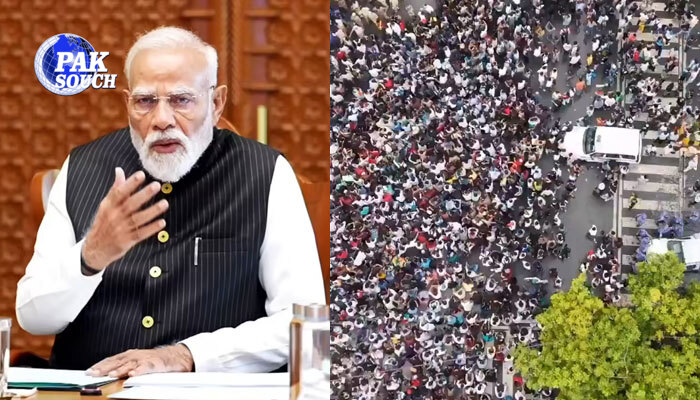
NEW DELHI: A youth-led protest movement in India has intensified in recent weeks, with demonstrations expanding beyond concerns over an examination scandal to include broader demands for government accountability, unemployment reforms, and improvements in the education system.
According to reports cited by international media, the movement—described as being driven largely by Generation Z—has emerged as one of the most significant public challenges faced by Prime Minister Narendra Modi during his third term in office.
The protests have reportedly been organized under the banner of a youth-led group known as the “Cockroach Janata Party,” which initially gained attention through an online satirical campaign before evolving into a nationwide protest movement.
Participants say the demonstrations were sparked by allegations surrounding examination irregularities but have since expanded to reflect wider frustrations over youth unemployment, educational standards, and public governance.
The movement has also gained additional attention following activist Sonam Wangchuk’s hunger strike and subsequent reported removal by authorities, developments that protesters say further energized the campaign.
According to reports referenced in the article, including coverage attributed to Reuters, the demonstrations represent one of the strongest waves of public pressure on the Modi administration since it began its third term.
Tensions escalated during a protest march toward India’s Parliament, where clashes reportedly broke out between demonstrators and security personnel.
Official figures cited in the reports state that at least 180 people were injured during the confrontations, including 118 police officers and 60 protesters.
Authorities also reportedly suspended mobile internet services in parts of the city and imposed security measures in sensitive areas following the unrest.
One of the central demands of the protesters is the resignation of India’s Education Minister, whom they hold responsible for the handling of examination-related issues and broader concerns affecting the education sector.
According to Deutsche Welle (DW), the movement began as a satirical online campaign but rapidly transformed into an organized street protest reflecting widespread frustration among young people over limited employment opportunities and declining confidence in the country’s education system.
The demonstrations have highlighted growing concerns among sections of India’s youth regarding job creation, transparency in competitive examinations, and access to quality education.
At the time of reporting, the article primarily presents the perspectives of protesters and media reports. The Indian government has previously stated that it is committed to maintaining law and order while addressing issues related to examinations and public administration. Any official response to the latest protests was not included in the provided report.
About The Author