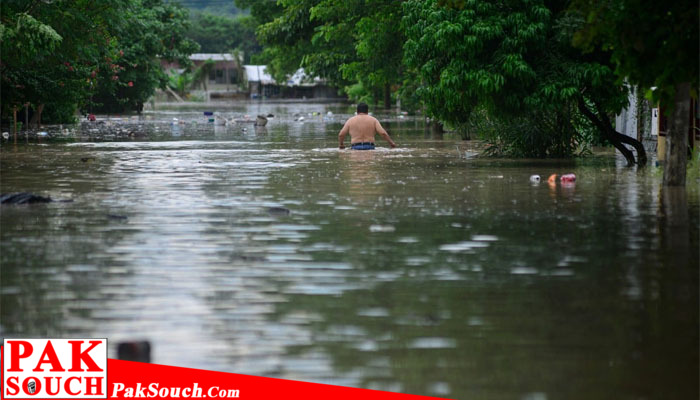
Mexico City, October 14: Catastrophic floods and torrential rains have wreaked havoc across Mexico, leaving at least 130 people dead and dozens missing, as emergency services continue massive rescue and relief operations in several parts of the country. The severe weather, which has persisted for days, has triggered landslides, collapsed homes, and washed away infrastructure, prompting authorities to declare a state of emergency in multiple regions.
According to international media reports, the storms have affected more than 100,000 homes nationwide, with roads, bridges, and communication lines severely damaged. The downpours have hit central and southern states particularly hard, disrupting electricity and transport networks and isolating entire communities.
Officials said the worst-affected regions include the states of Puebla, Veracruz, Guerrero, Oaxaca, and Hidalgo — where heavy rains caused rivers to overflow, sweeping through towns and farmlands. In some areas, power lines were downed, plunging thousands of households into darkness. Five states have reported widespread blackouts, and repair work remains slow due to continuous rainfall.
Mexico’s President said during a televised address that the intensity of the rainfall was “beyond expectations,” acknowledging that authorities had been unprepared for the scale of destruction. “We did not anticipate such severe weather,” the President said, adding that government agencies are now working around the clock to restore services and assist those affected. Officials have warned that further damage remains possible, as forecasts predict continued rainfall in the coming days.
Rescue operations are being led by civil defense units, firefighters, and military personnel. More than 10,000 soldiers have been deployed with heavy machinery, boats, and emergency vehicles to assist in evacuations and the distribution of aid. “Our first priority is to rescue those trapped by rising water and ensure food, medical supplies, and shelter reach the affected communities,” an army spokesperson said.
Temporary shelters have been established across the flooded regions to accommodate thousands of displaced families. Volunteers and humanitarian organizations are working alongside government teams to provide clean water, food, blankets, and medical assistance to survivors.
Eyewitnesses describe scenes of devastation in towns where floodwaters have submerged entire neighborhoods. “The river destroyed everything — houses, crops, animals,” said one resident of Veracruz. “We have lost everything we owned.”
Meteorologists attribute the destructive rains to a powerful tropical weather system that developed off the Pacific coast, intensifying as it moved inland. The Mexican National Meteorological Service has issued further warnings of possible mudslides and flash floods in mountainous areas, urging residents to remain on high alert.
International aid agencies and neighboring countries have also expressed concern and offered support. The United Nations Office for the Coordination of Humanitarian Affairs (OCHA) said it is closely monitoring the situation and is prepared to assist with relief logistics if requested by the Mexican government.
As the death toll continues to rise, authorities fear the number of missing persons could increase once rescue teams gain access to remote areas that remain cut off. Recovery efforts are expected to take weeks, if not months, given the scale of destruction and the continuing risk of rainfall and flooding.
The disaster has once again highlighted Mexico’s vulnerability to extreme weather events, which experts link to climate change and poor infrastructure planning in flood-prone areas. With thousands still in need of help and communities struggling to rebuild, officials have appealed for national unity and international solidarity in the face of one of the country’s deadliest natural calamities in recent years.