Washington, D.C.: U.S. President Donald Trump has expressed optimism that Iran could eventually join the Abraham Accords, the normalization framework that has reshaped Middle East diplomacy since its launch in 2020.
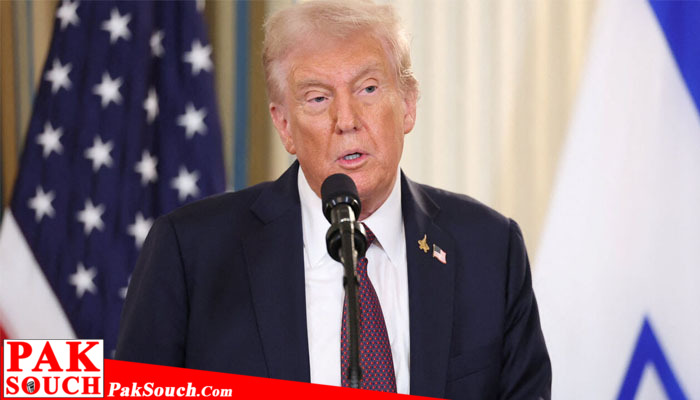
Speaking at a joint press conference with Israeli Prime Minister Benjamin Netanyahu at the White House, Trump said: “Maybe one day Iran, too, will join the Abraham Accords. I hope Iran will be part of this historic peace process.”
The remark marks one of the rare occasions Trump has publicly suggested the possibility of Tehran participating in the agreement, despite the deeply adversarial relationship between the United States, Israel, and Iran.
Background: Abraham Accords
The Abraham Accords, brokered during Trump’s first presidential term, established formal diplomatic relations between Israel and four Muslim-majority countries: the United Arab Emirates, Bahrain, Morocco, and Sudan. The agreements were hailed by Washington as a historic breakthrough in Arab-Israeli relations, though critics argued they bypassed the Palestinian question.
Trump has previously voiced confidence that Saudi Arabia would join the pact, pointing to Riyadh’s quiet security and economic cooperation with Israel. Adding Iran to that list, however, signals an even more ambitious — and politically contentious — vision.
Iran’s Position
For decades, Iran has positioned itself as the strongest opponent of Israel in the Muslim world, supporting groups such as Hezbollah and Hamas. Tehran has consistently rejected normalization, calling the Abraham Accords a “betrayal of the Palestinian cause” by Arab states.
Analysts note that Trump’s statement is less about current diplomatic realities and more about signaling a long-term aspiration — one that would require a dramatic shift in Iran’s foreign policy posture.
Regional Implications
If Iran were ever to embrace the Abraham Accords, it would mark a seismic shift in Middle East geopolitics, potentially easing decades of hostility and reshaping security alignments in the Gulf. However, given ongoing tensions over Iran’s nuclear program, U.S. sanctions, and its confrontations with Israel, such a scenario appears highly unlikely in the near future.
For now, Trump’s remarks highlight Washington’s ongoing effort to expand the scope of the accords beyond their initial signatories, with hopes that additional Arab and Muslim-majority countries may follow.