

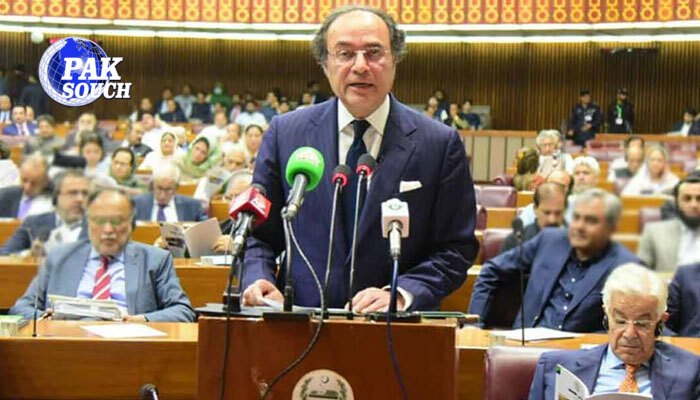
Islamabad: Finance Minister Muhammad Aurangzeb has indicated that the government aims to gradually phase out and eventually abolish the super tax, stating that efforts in this direction will continue every year.
He made the remarks during a meeting of the Senate Standing Committee on Finance, where key tax policy issues were discussed, including proposed changes and relief measures for businesses.
“Clear Direction Towards Ending Super Tax”
The finance minister said the government’s policy direction is clear and focused on eliminating the super tax over time.
“Our direction is very clear — we want to end the super tax. We will continue efforts every year to remove it completely,” he stated.
His comments suggest that while immediate abolition may not be possible, the government intends to gradually reduce its scope as fiscal conditions allow.
Debate in Senate Finance Committee
During the session, committee members also discussed possible amendments to the tax structure, including proposals to increase exemption thresholds.
Senator Abdul Qadir suggested raising the exemption limit from Rs50 crore to Rs1 billion, arguing that it would provide relief to businesses and improve investment conditions.
The proposal reflects ongoing discussions in policy circles about balancing revenue needs with business-friendly reforms.
FBR Response on Revenue Impact
Federal Board of Revenue (FBR) Chairman noted that increasing the exemption threshold to Rs1 billion would require the government to introduce approximately Rs250 billion in additional tax measures to compensate for the revenue shortfall.
This highlights the fiscal challenges involved in reducing or eliminating major revenue-generating taxes while maintaining budget stability.
What Is Super Tax?
The super tax is an additional levy imposed on high-earning corporations in Pakistan. It was introduced as a temporary measure to support revenue collection during periods of fiscal pressure but has remained in place due to ongoing budgetary needs.
Over time, it has become a contentious issue for the business community, which argues that it discourages investment and reduces corporate competitiveness.
Government’s Reform Agenda
The finance minister’s remarks are part of a broader economic reform agenda aimed at improving Pakistan’s investment climate, simplifying the tax system, and encouraging industrial growth.
Authorities have been under pressure to reduce the tax burden on the formal sector while simultaneously expanding the overall tax base to meet fiscal targets.
Balancing Growth and Revenue Needs
Economists note that while abolishing the super tax could boost investor confidence, the government must also ensure alternative revenue sources to avoid widening the fiscal deficit.
This creates a policy challenge between promoting business growth and maintaining sufficient government income for public spending.
Conclusion
The finance minister’s indication that the super tax may eventually be abolished signals a potential shift in Pakistan’s taxation policy. However, officials emphasize that any such move will depend on fiscal space and the introduction of compensatory revenue measures to maintain economic stability.
About The Author