

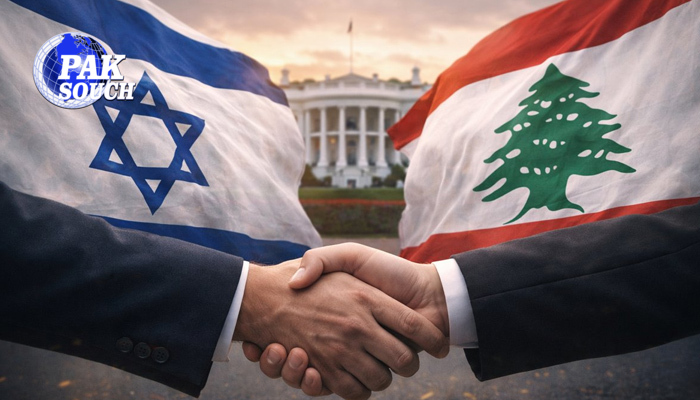
Washington: Israel and Lebanon have reportedly agreed to a ceasefire arrangement following U.S.-mediated negotiations, marking a significant diplomatic development aimed at reducing tensions along the Israel-Lebanon border.
The agreement was announced after the fourth round of trilateral talks held in Washington, where mediators sought to prevent further escalation and establish a framework for continued dialogue.
Joint Statement Issued After Talks
Following the negotiations, a joint statement was released outlining the key points of the understanding reached between the two sides.
According to the U.S. State Department, both Israel and Lebanon have agreed to a ceasefire and have committed to continuing discussions in pursuit of a broader and more comprehensive agreement.
Officials said representatives from the two countries are scheduled to meet again on June 22 to continue negotiations.
Security Measures Included in Agreement
The reported framework includes several security-related provisions intended to stabilize the situation in southern Lebanon.
According to the U.S. State Department:
- Hezbollah is expected to halt attacks.
- Hezbollah must withdraw from the southern Litani sector.
- Special pilot zones will be established.
- These zones will be controlled by the Lebanese Armed Forces.
- Non-state armed groups will not be permitted to enter those areas.
The measures are intended to reduce the risk of renewed clashes and strengthen state control in sensitive border regions.
Commitment to Reducing Hostilities
The joint statement emphasized that both Israel and Lebanon reaffirmed that they have no aggressive intentions toward one another.
It further noted that the two countries intend to work toward a broader agreement designed to improve security and reduce tensions.
According to the statement, the primary objective of the ceasefire is to lower regional tensions and prevent further violence.
Trump Previously Claimed Progress
The development follows recent remarks by U.S. President Donald Trump, who said he had held a productive telephone conversation with Israeli Prime Minister Benjamin Netanyahu regarding the situation in Lebanon.
In a post on his social media platform, Trump stated that there would be no military advance toward Beirut and that forces that had already been dispatched were being redirected.
He also claimed that communication had taken place through senior representatives with Hezbollah and that an understanding regarding a ceasefire had been reached.
According to Trump, the arrangement would involve:
- Israel refraining from attacks on Hezbollah.
- Hezbollah refraining from attacks on Israel.
Continued Military Activity Raised Questions
Despite Trump’s earlier announcement, Israeli Prime Minister Benjamin Netanyahu subsequently stated that operations planned in southern Lebanon would continue.
Those remarks created uncertainty about the status and scope of any ceasefire understanding and highlighted the complexities involved in implementing agreements in a highly volatile security environment.
Regional Significance
Any reduction in hostilities between Israel and Lebanon would be closely watched across the Middle East, where fears of broader regional conflict have intensified in recent months.
International observers have repeatedly warned that escalation along the Israel-Lebanon border could have serious humanitarian, political, and security consequences for the wider region.
The success of the reported ceasefire will likely depend on implementation, monitoring mechanisms, and continued diplomatic engagement among all parties involved.
Conclusion
According to the U.S. State Department, Israel and Lebanon have agreed to a ceasefire under American mediation and will continue negotiations aimed at reaching a more comprehensive agreement. The arrangement reportedly includes security measures in southern Lebanon and commitments to reduce hostilities, with further talks scheduled for June 22. Whether the ceasefire holds will depend on developments on the ground and continued diplomatic efforts in the coming weeks.
About The Author