

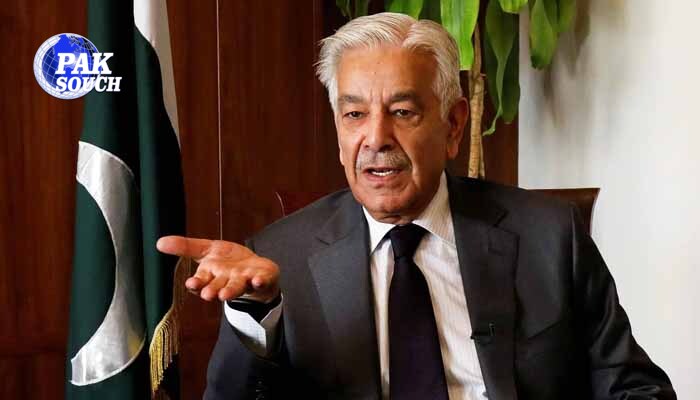
ISLAMABAD: Pakistan’s Defence Minister Khawaja Asif has expressed serious concerns about the Afghan Taliban’s commitment to curbing the activities of the banned Tehreek-e-Taliban Pakistan (TTP), stating that the Taliban leadership cannot be fully trusted because of what he described as their contradictory and inconsistent behavior.
Speaking during an interview on Geo News’ current affairs program “Aaj Shahzeb Khanzada Kay Sath,” the defence minister said that while positive messages occasionally appear in the media regarding the Taliban’s stance against militant groups, there has been little evidence of meaningful action on the ground.
Concerns Over Continued TTP Support
Khawaja Asif said that despite public statements and media reports suggesting cooperation, Pakistan has not observed any significant reduction in support for the outlawed TTP from within Afghanistan.
According to the minister, the assurances often reported in the media have yet to translate into practical measures that would demonstrate a genuine commitment by Afghan authorities to address Pakistan’s security concerns.
He argued that any serious message regarding counterterrorism cooperation should come directly from the Afghan Taliban’s senior leadership rather than through indirect reports or unofficial channels.
“The message so far exists mainly in the media,” Asif said, adding that developments on the ground do not indicate a meaningful change in the Taliban’s approach toward the TTP.
‘Mixed Signals’ Create Distrust
The defence minister emphasized that the Afghan Taliban send what he called “mixed signals,” making it difficult for Pakistan to place confidence in their assurances.
According to him, the Taliban leadership often provides verbal commitments during meetings with Pakistani officials but avoids putting those commitments into writing.
Asif stated that whenever discussions are held between the two sides, Taliban representatives verbally express willingness to prevent the TTP from using Afghan territory. However, he claimed that they consistently refuse to provide written guarantees regarding such commitments.
He described this reluctance as a major indication that Pakistan should exercise caution when evaluating Taliban promises.
Demand for Written Commitments
The minister stressed that written agreements are essential for building trust between governments, particularly on sensitive security issues involving terrorism and cross-border militancy.
He argued that verbal assurances alone are insufficient when dealing with threats that directly affect Pakistan’s national security and regional stability.
According to Asif, the refusal to formally document commitments raises questions about the seriousness of the Afghan Taliban’s intentions and their willingness to take concrete action against militant organizations operating from Afghan territory.
Reference to Trilateral Agreement
Khawaja Asif also referred to a previous trilateral agreement involving Pakistan, Afghanistan, and the United Arab Emirates (UAE).
He stated that a written agreement had been reached among the three parties, but claimed that none of its key provisions were effectively implemented.
According to the defence minister, the lack of progress on the agreement further contributed to Pakistan’s concerns regarding the reliability of commitments made by the Afghan Taliban.
He suggested that repeated failures to implement agreed measures have weakened confidence and complicated efforts to establish a stable framework for cooperation.
Ongoing Security Concerns
Pakistan has repeatedly expressed concerns about the presence and activities of the banned TTP, which Islamabad says continues to pose a significant security threat.
Pakistani authorities have frequently called on the Afghan Taliban administration to prevent militant groups from using Afghan territory for attacks against Pakistan. The issue has remained a major point of tension in relations between the two neighboring countries.
In recent months, security incidents along the Pakistan-Afghanistan border and allegations of cross-border militant activity have further strained ties between Islamabad and Kabul.
Broader Regional Implications
Analysts note that cooperation between Pakistan and Afghanistan on counterterrorism remains crucial for regional security. Any lack of trust between the two sides could complicate efforts to address militant threats and maintain stability along the shared border.
The defence minister’s remarks reflect continuing concerns within Pakistan’s leadership regarding the effectiveness of engagement with the Afghan Taliban and the need for stronger, verifiable commitments on security matters.
As relations between the two countries continue to face challenges, the issue of action against the TTP is expected to remain at the center of diplomatic and security discussions in the months ahead.
About The Author