

LAHORE: The Pakistan Peoples Party (PPP) on Monday opposed proposals to hold a referendum on the creation of new provinces, arguing that any change to provincial boundaries must follow the constitutional procedure laid down in Article 239(4).
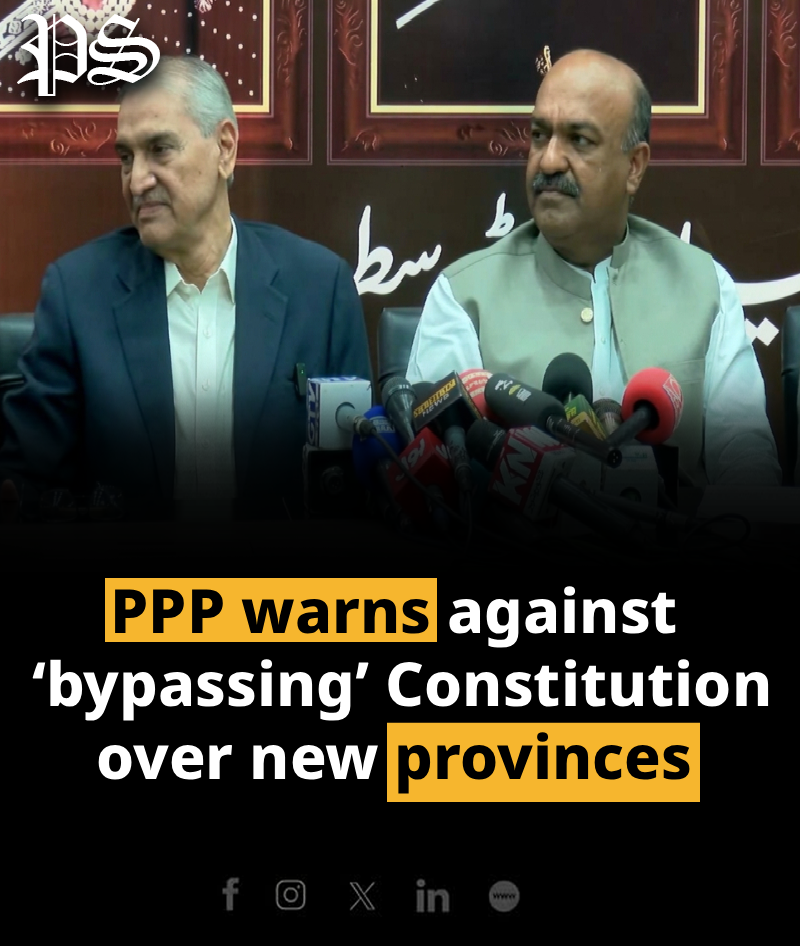
Speaking at a news conference in Lahore, PPP leaders Chaudhry Manzoor and Nadeem Afzal Chan said the Constitution could not be bypassed through a referendum, warning that such an approach could undermine the existing parliamentary and constitutional framework.
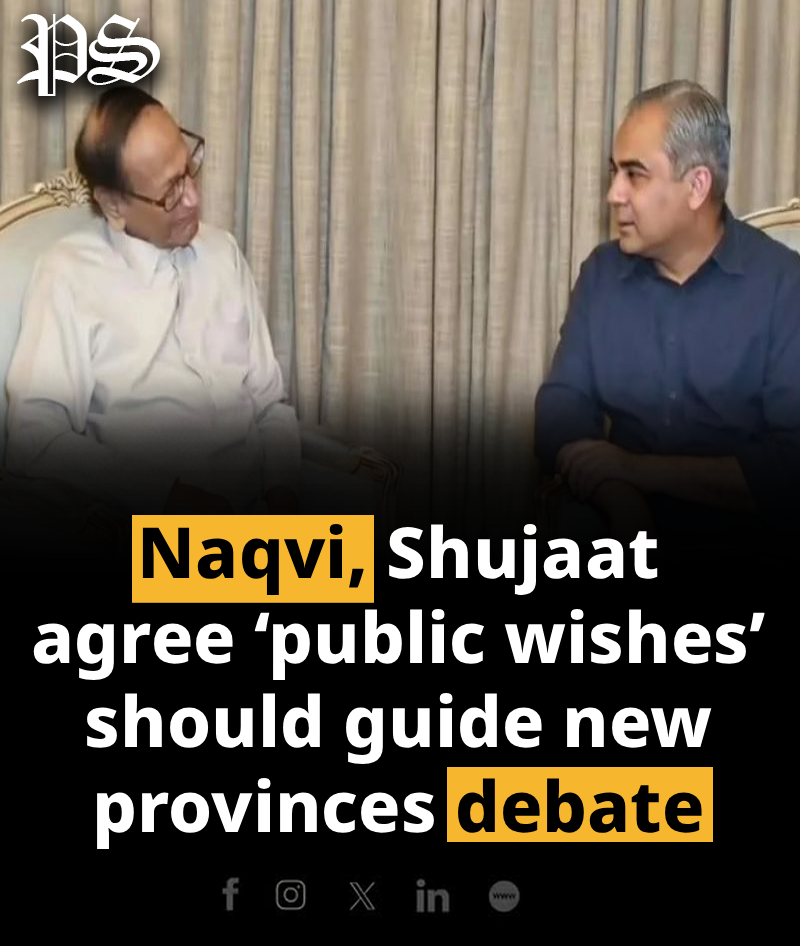
The debate over creating new provinces has gained momentum in recent weeks, with Interior Minister Mohsin Naqvi proposing a referendum to determine public opinion on the politically contentious issue.
The government has also indicated plans to consult parliamentary parties, including the PPP and Muttahida Qaumi Movement-Pakistan (MQM-P), on administrative restructuring.
The proposals have exposed differences among political parties, particularly over the constitutional process and the future administrative structure of the country.
During the news conference today, Chaudhry Manzoor said the Constitution provided a specific mechanism for amendments and that the authority to amend it rested with parliament.
“Article 239 lays down the procedure for constitutional amendments. Show me any article other than Article 239 that gives a provincial assembly the power of veto,” he said.
He questioned whether a public referendum could be used to introduce constitutional changes, arguing that popular opinion could not replace the procedures prescribed by the Constitution.
Manzoor described the Constitution as a framework that could not be bypassed through what he called a backdoor route, warning that such an approach could pave the way for arbitrary changes to the country’s administrative structure.
He said the Constitution required a two-thirds majority in parliament and the relevant provincial assembly for changes involving provincial boundaries.
Under Article 239, a constitutional amendment seeking to alter the limits of a province must secure a two-thirds majority in the provincial assembly concerned before being presented to the president for assent following parliamentary approval.
PPP raises concerns over constitutional safeguards
Manzoor said the principle behind the constitutional provision was that any proposed change to a province’s boundaries should first be debated in the province concerned.
He recalled that the framers of the 1973 Constitution had sought to prevent an authoritarian ruler from changing the country’s provincial structure through unilateral orders, referring to the creation and subsequent dissolution of One Unit.
He questioned whether differences of opinion on an issue should automatically lead to a referendum when the Constitution already provided a mechanism for resolving such matters.
The PPP leader also cautioned against attempts to remove Article 239, saying changes imposed through force would neither be sustainable nor have the capacity to bring all stakeholders on board.
Nadeem Afzal Chan said PPP Chairman Bilawal Bhutto-Zardari had raised issues concerning provincial autonomy, democracy and media freedom.
He added that neither the PML-N nor the federal government had issued a clear position on the question of provinces.
Political proposals and the way forward
Naqvi proposed holding a referendum on the creation of new provinces on November 12, arguing that the people should have the final say on the politically contentious issue.
He said political parties could hold differing positions but public opinion should determine the way forward, adding that he would support either outcome.
Minister of State for Parliamentary Affairs Tariq Fazal Chaudhry also said in an interview that a referendum would be held on the creation of new provinces. However, the government has yet to formally announce a referendum proposal or present a definitive plan for establishing additional provinces.
The debate has also exposed differing positions among political parties. PPP Chairman Bilawal Bhutto-Zardari has opposed “dividing” Sindh, while MQM-P leader Mustafa Kamal has supported the creation of new provinces and transferring Karachi to federal administration.
Proposals for administrative restructuring have surfaced repeatedly over the years, including demands for separate provinces in South Punjab, Bahawalpur and Hazara.
Planning Minister Ahsan Iqbal has also referred to a proposed framework comprising 14 provinces, saying he had suggested that the prime minister form a committee to examine the proposal.
The creation of new provinces would require constitutional amendments, with Article 239(4) prescribing a two-thirds majority in the provincial assembly concerned for any legislation seeking to alter a province’s boundaries.
PAK SOUCH MEDIA GROUP
Daily Pak Souch Newspaper Sukkur – Daily Pak Special Newspaper Karachi – Daily Pak Today Newspaper Karachi – Daily Pak Jazbo Newspaper Sukkur
Head Office : Ayub Gate Shaikh Muhalla Near Rabbania Masjid Sukkur
Karachi Office : Office No. 1901-B, 19th Floor Saima Trade Tower (B) Block I.I Chandigarh Road Near Jung Press, Shaheen Complex & National Museum of Pakistan Karachi Sindh Pakistan.
Contact : 03009319022
Website 1 : https://paksouch.com/
Website 2 : https://sindhi.paksouch.com/
Website 3 : https://pakjazbo.com/
Website 4 : https://urdu.pakjazbo.com/
About The Author