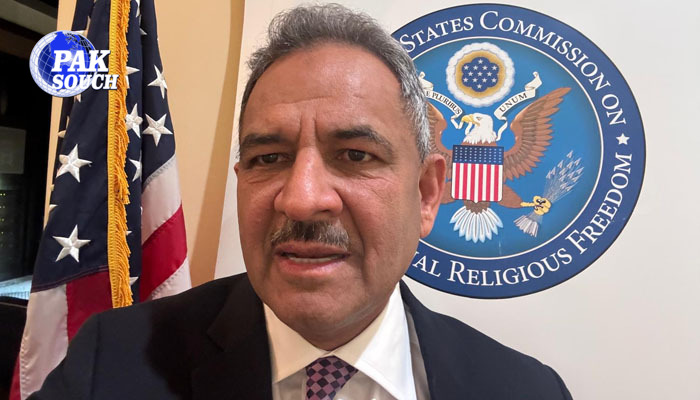
Washington: American-Pakistani physician Dr. Asif Mahmood has been reappointed for another two-year term as a member of the United States Commission on International Religious Freedom (USCIRF), marking a historic achievement as the first Pakistani, first Muslim, and first Asian to serve consecutively in this important role.
Speaking to Geo News, Dr. Asif Mahmood described the reappointment as a great honor and said he would continue working to raise a stronger voice for religious freedom and human rights across the world, particularly in South Asia.
According to details, Dr. Mahmood’s new term will continue until May 14, 2028. He is associated with Bradbury, California, and originally belongs to Kharian, Pakistan.
Dr. Mahmood stated that he considers his continued appointment a major responsibility and pledged to work more effectively for the protection of religious minorities and the promotion of fundamental human rights globally.
The USCIRF is an independent bipartisan US federal government commission that monitors religious freedom worldwide and advises the White House, the State Department, and the US Congress on policy matters related to religious rights and violations.
Dr. Asif Mahmood was first appointed to the commission two years ago and previously served as the vice chair of the body. The commission is often considered one of the key advisory institutions influencing American policy on international religious freedom issues.
During his previous tenure, Dr. Mahmood was vocal on issues concerning South Asia, particularly allegations of religious discrimination and human rights violations in India and Indian-administered Kashmir.
Last week, during the final hearing of the outgoing commission held in a US Senate committee room, discussions reportedly focused on human rights concerns in India.
Addressing the hearing, Dr. Mahmood stated that authorities in Indian-administered Kashmir were allegedly collecting data even on mosque prayer leaders and religious clerics. He urged the commission to classify India as a “Country of Particular Concern” over alleged violations of religious freedom.
His remarks drew attention to ongoing international debates regarding minority rights, religious freedoms, and state policies in the region.
Earlier this year, USCIRF’s annual report released in March under the leadership of Vice Chair Vicky Hartzler and Dr. Asif Mahmood strongly criticized India over issues related to religious freedom and treatment of minorities.
The report recommended that the Trump administration pressure India to allow USCIRF and the US State Department to independently assess the situation of religious freedom in the country.
The commission also called for sanctions against India’s intelligence agency RAW and the Hindu nationalist organization RSS, accusing them of involvement in activities linked to religious discrimination and extremism.
Additionally, the report proposed freezing the assets of certain Indian officials and individuals allegedly connected to violations of religious freedom and barring them from entering the United States.
The commission further suggested that US security assistance and bilateral trade policies with India should be linked to improvements in religious freedom conditions.
India has previously rejected similar reports and recommendations issued by USCIRF, describing them as biased and politically motivated. Indian authorities have consistently maintained that the country’s constitution guarantees equal rights and protections for all religious communities.
Dr. Mahmood’s reappointment has been welcomed by many members of the Pakistani-American community and human rights advocates, who view his continued role as significant representation for Muslims and South Asians within a major US policy institution.
Observers believe his second consecutive term could further increase international attention on issues concerning religious liberty, minority protections, and human rights in South Asia and beyond.
The USCIRF regularly publishes reports and recommendations that influence policy discussions in Washington regarding countries accused of violating religious freedoms. Although the commission’s recommendations are advisory in nature, they often receive significant attention from lawmakers, diplomats, and international rights organizations.
About The Author