

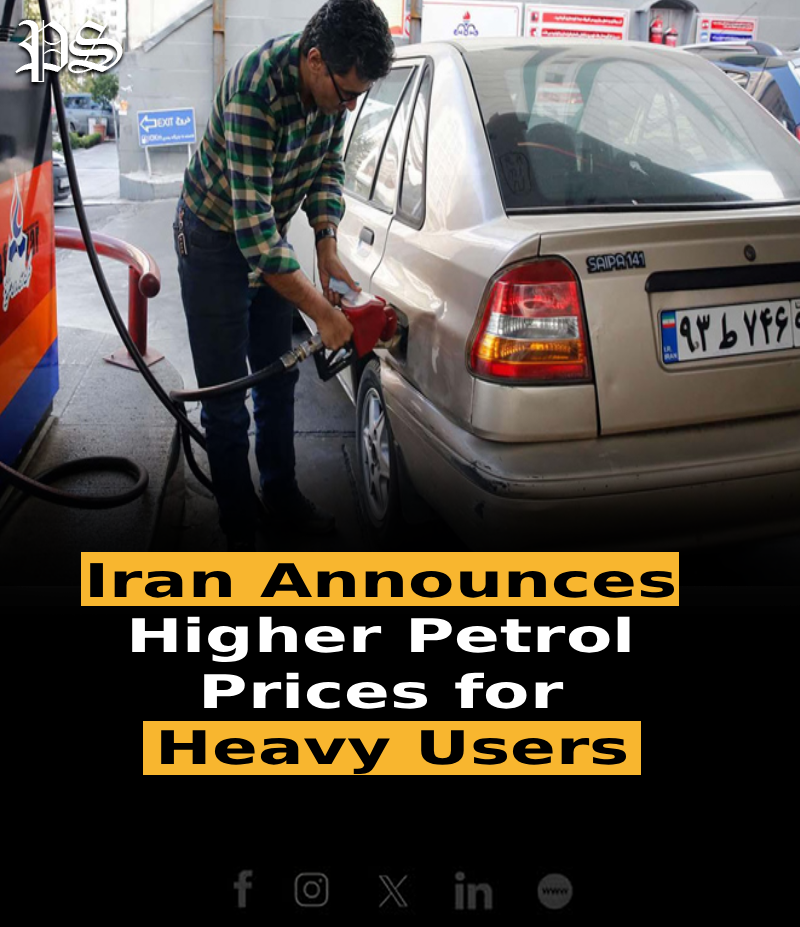
The Iranian government has announced higher petrol prices for people who use more than a certain amount of fuel every month.
Iranian government spokesperson Fatemeh Mohajerani said that the new price will start from September 8.
Under the new system, people who use more than 110 litres of petrol in one month will have to pay 10,000 tomans for each additional litre.
Previously, the price for petrol above the monthly limit was 5,000 tomans per litre. This means the price for extra petrol will now be twice as high.
However, the government has said that there will be no change in the petrol prices for consumers who use up to 110 litres per month.
Iran already has a system in which petrol is sold at different prices depending on how much fuel a person uses.
The first 60 litres of petrol are available at a price of 1,500 tomans per litre. After that, the next 50 litres are sold at 3,000 tomans per litre.
Together, these two levels cover 110 litres of monthly petrol use.
If a consumer uses more than 110 litres in a month, the extra petrol will now cost 10,000 tomans per litre from September 8.
The government has explained the change as part of its effort to manage fuel consumption. Iran has relatively low petrol prices compared with many other countries, and fuel consumption has remained a major issue for the government.
The new price mainly affects people who use large amounts of petrol. Ordinary consumers who stay within the 110-litre monthly limit will not face an increase under the announcement.
The government’s decision could encourage people to reduce unnecessary fuel use. Officials may also hope that the higher price for extra petrol will reduce excessive consumption.
Fuel pricing is an important issue in Iran because petrol is heavily subsidized. The government spends large amounts of money to keep fuel prices low for consumers.
Low prices have also contributed to high fuel demand. Many people depend heavily on private cars for daily travel, while fuel consumption has continued to put pressure on the country’s energy system.
The new policy creates a clear difference between normal and high petrol users. People who stay within the monthly limit will continue to receive petrol at the existing rates. Those who need more than 110 litres will pay a much higher price for the extra amount.
For example, if a person uses 120 litres in a month, the first 60 litres would be charged at 1,500 tomans per litre. The next 50 litres would be charged at 3,000 tomans per litre. The remaining 10 litres would be charged at the new rate of 10,000 tomans per litre.
This means that the higher rate only applies after the 110-litre limit has been reached.
Iranian government spokesperson Fatemeh Mohajerani confirmed the change but said that the price for users within the monthly limit would remain unchanged.
The announcement is expected to affect mainly people with high fuel consumption. It may also lead to discussions about fuel subsidies, petrol prices and the cost of transportation in Iran.
The government will need to monitor the impact of the new policy after it comes into effect. If fuel consumption falls, officials may consider the measure successful. If it creates pressure on consumers, especially people who depend on cars for work, there could be further debate over the policy.
The announcement is another step by Iran to control petrol consumption without immediately increasing prices for all consumers.
For now, the main change is simple: petrol prices will remain the same for monthly consumption of up to 110 litres, while every litre used beyond that limit will cost 10,000 tomans from September 8.
About The Author