

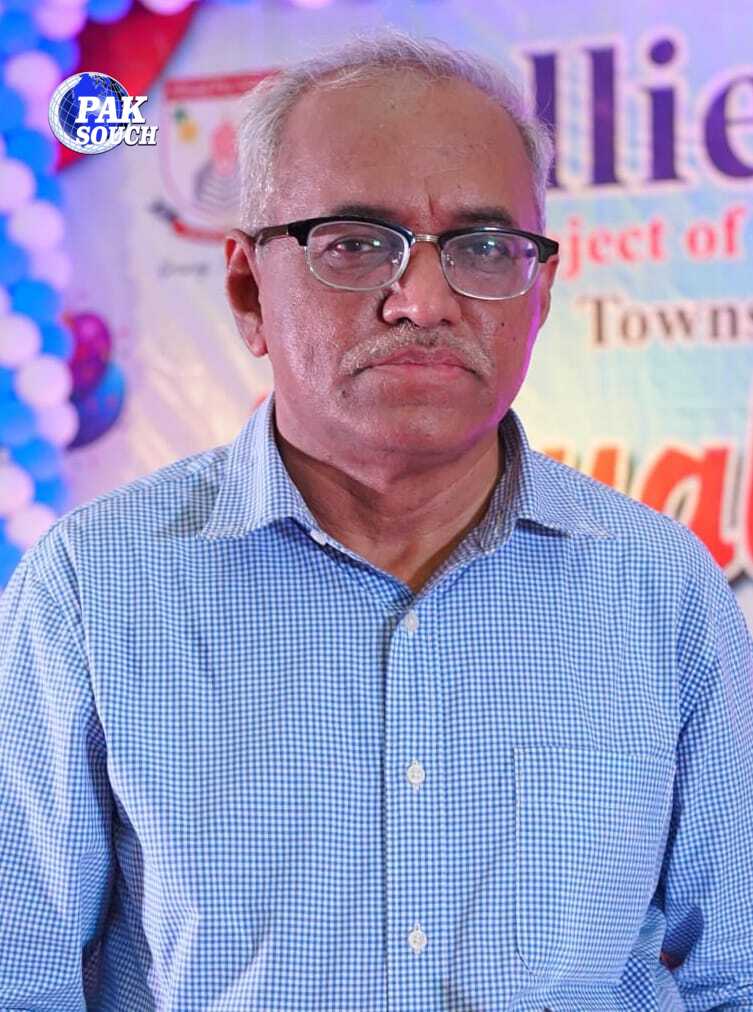
SUKKUR (Bureau Report): Chairman of the Association of Private Institutions (API) Sindh and Deputy Convener of the Joint Action Committee of Private School Associations (JAC) Sindh, Bashir Ahmed Channa, has strongly opposed the Sindh government’s recent decision to change the weekly holiday and school timings, demanding that the decision be withdrawn immediately.
He warned that if the decision was not reversed, private educational institutions and their representative bodies would be compelled to announce their future course of action.
Bashir Ahmed Channa said the decision had been taken hastily without properly considering ground realities or consulting education experts, private educational institutions, parents, teachers and other relevant stakeholders. He warned that the decision could have serious consequences for millions of students, parents, teachers and educational institutions across Sindh.
He said the introduction of a Saturday holiday would result in the loss of 52 valuable teaching days during an academic year. According to him, the lost instructional time could not realistically be compensated merely by extending the school day by one hour.
He questioned whether preschool and primary-level children could practically remain in classrooms until 2:30pm during the intense heat and humidity of August and September. He also raised concerns about whether female teachers, in particular, could reasonably be expected to perform continuous teaching duties under such harsh weather conditions.
Channa questioned why the decision had been changed so quickly, saying that the ink on the earlier decision had barely dried before another change was introduced. He asked whether ground realities, relevant data and consultation with stakeholders should not have taken place before making such important education-related decisions.
He stressed that provincial policies should not be based solely on conditions in Karachi. According to him, the government must consider the diverse climatic, geographical and social conditions prevailing across all districts of Sindh. He argued that imposing a single schedule across the entire province was neither practical nor wise.
The API Sindh chairman also questioned the relevance of the provincial education steering committee if major decisions were to be taken without consulting its stakeholders. He urged representatives of private educational institutions serving on the committee to adopt a stronger position and consider distancing themselves from what he described as an ineffective body.
Channa reiterated his longstanding position that school timings and holidays should either be determined by individual schools according to local weather conditions or decided through divisional committees comprising commissioners, deputy commissioners, relevant education directorates and representatives of school associations.
He said such a mechanism would allow authorities to prepare schedules based on the actual circumstances of each area rather than imposing a uniform timetable throughout Sindh.
According to Channa, the intense heat and humidity during August and September make extended school hours particularly difficult for children. He claimed that many students become exhausted by noon or 1pm, forcing schools in some cases to dismiss them earlier than scheduled.
He criticized policymakers for making decisions from air-conditioned offices and comfortable environments without adequately understanding the conditions faced by students and teachers in schools.
He also highlighted the economic difficulties confronting many families. Channa said a considerable number of children from low- and middle-income households attend school without breakfast, while many parents struggling with inflation and financial pressures are unable to provide adequate lunches or pocket money.
He argued that expecting such children to remain fully attentive until 2:30pm or 3pm while dealing with heat, hunger, thirst and humidity was unrealistic. Such conditions, he warned, could negatively affect children’s physical health, mental concentration and academic performance.
He further pointed out that many government schools across Sindh continue to face prolonged power outages and inadequate basic facilities. According to him, numerous schools lack reliable alternative electricity systems, solar power, proper ventilation and effective arrangements to protect children from extreme heat.
Channa said it was easy to extend teaching hours on paper, but understanding the difficulties faced by millions of children required direct awareness of their daily circumstances.
“Education policies should not be formulated merely in files and offices; they must be based on ground realities,” he maintained, stressing that policymakers genuinely concerned about children’s futures and the quality of education must take into account students’ conditions, parents’ difficulties, teachers’ capacity and the practical circumstances of educational institutions.
He said private schools were facing considerable pressure from parents, many of whom were expressing serious concern over what they considered unnecessarily long and demanding school schedules. Parents, he said, were particularly worried about the impact of extreme heat, humidity and extended classroom hours on preschool, primary and secondary-level students.
Channa urged the Sindh government to focus on improving the performance and basic facilities of government schools and to allow private educational institutions greater autonomy in their administrative and academic decisions.
He argued that parents themselves would hold private schools accountable if their performance was unsatisfactory, and poorly performing institutions would eventually struggle to maintain their position.
The API Sindh chairman finally demanded that the Sindh government immediately review its decision regarding the weekly holiday and school timings and restore the previous schedule.
He warned that if the decision was not withdrawn within the next 15 days, the Association of Private Institutions and the Joint Action Committee would be justified in announcing their future course of action in the broader interest of students, parents, teachers and private educational institutions.
About The Author